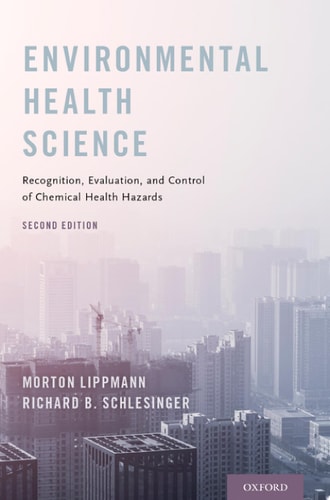
Environmental Health Science: Recognition, Evaluation, and Control of Chemical Health Hazards
0
0
As an Amazon Associate and affiliate partner, Menrva Books earns from qualifying purchases. Learn more
Author Description
Since the publication of the first edition of ENVIRONMENTAL HEALTH SCIENCE, preventing and treating acute and chronic disease caused by exposure to chemical health hazards has become even more central to the practice of public health. This fully revised and updated edition introduces students and practitioners to the concepts and terminology from chemistry, ecology, toxicology, and engineering necessary for identifying the sources of environmental contaminants; quantifying environmental levels and human exposures; and preventing and remediating environmental health hazards. Liberal use of figures and tables allows readers to visualize complex scientific phenomena and to understand their effects on every aspect of the environment from cells to entire ecosystems. Authored by two of the foremost educators, investigators, and practitioners in this increasingly important discipline, the new edition of ENVIRONMENTAL HEALTH SCIENCE is an essential resource for students and practitioners in public health; civil, environmental, and chemical engineers; policy makers; science journalists; and anyone else committed to promoting human health and the health of our environment.
Menrva's Summary
THE THESIS
This text investigates the fundamental mechanisms for identifying, quantifying, and mitigating chemical health hazards within the environment to prevent acute and chronic disease. Morton Lippmann and Richard B. Schlesinger, both established experts in environmental health and toxicology, synthesize principles from chemistry, ecology, and engineering to provide a comprehensive framework for public health practice. The book serves as a technical guide for analyzing the lifecycle of contaminants from their source to their impact on human biological systems and broader ecosystems.
THE SCOPE MAP
What You Will Find
- Methodologies for identifying environmental contaminant sources
- Quantitative techniques for measuring environmental levels and human exposure
- Strategies for the prevention and remediation of chemical hazards
- Visual data representations including figures and tables detailing complex scientific phenomena
Scope Limits
- The text focuses primarily on chemical hazards and may not provide exhaustive coverage of biological or radiological health threats.
- It is structured as an academic and professional reference rather than a policy-making manual for specific legislative implementation.
THE AUTHORITY PERSPECTIVE
Experts and educators recognize this work as a foundational text for students and professionals in public health and environmental engineering. Readers frequently note the technical density of the prose, which requires a solid background in the underlying scientific disciplines to fully utilize the provided methodologies.
Page Count:
400
Publication Date:
2017-01-01
Publisher:
Oxford University Press
ISBN-10:
0190688645
ISBN-13:
9780190688646
Science
Engineering
Environmental Health
Public Health
Pollution
Medical
Toxicology
Allied Health
Community Tags
Similar Books