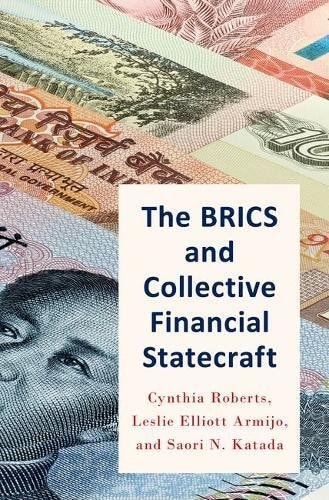
BRICS and Collective Financial Statecraft
0
0
As an Amazon Associate and affiliate partner, Menrva Books earns from qualifying purchases. Learn more
Author Description
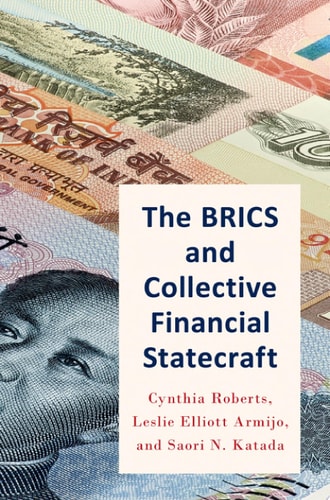
In the early 21st century, five rising powers (Brazil, Russia, India, China, and South Africa) formed an exclusive international club, the BRICS. Although not extreme revisionists, the BRICS recognize an ongoing global power shift and contest the West's pretensions to permanent stewardship of the existing economic order. Together they exercise collective financial and monetary statecraft to achieve larger foreign policy goals. The BRICS share common resentments-of U.S. dominance of the global financial system, of playing junior roles in economic governance, and of serving as frequent targets of financial sanctions. They also share common objectives, such as obtaining greater financial autonomy and influence within the Bretton Woods institutions. Their financial statecraft ranges from pressure for the internal reform of international organizations and markets to operating outside the system through the creation of both new multilateral institutions and opportunity structures in international financial markets. To the surprise of many observers, the joint actions of the BRICS have been largely successful. The BRICS' future depends not only on their bargaining power and ability to successfully adjust to market shifts, but also on their ability to overcome domestic impediments to sustainable economic growth, which is the ultimate basis for their international influence.
Menrva's Summary
THE THESIS
This book investigates how the BRICS nations utilize collective financial statecraft to challenge Western dominance and reshape the global economic order. Cynthia Roberts, an expert in international security and political economy, analyzes the strategic motivations of Brazil, Russia, India, China, and South Africa. She argues that these nations leverage their combined economic weight to secure greater autonomy and influence within established institutions like the IMF and World Bank, while simultaneously building alternative financial structures to mitigate the impact of Western sanctions.
THE SCOPE MAP
What You Will Find
- Analysis of the geopolitical motivations behind the formation and expansion of the BRICS coalition.
- Examination of financial statecraft tools, including the creation of new multilateral institutions and the pursuit of market-based influence.
- Assessment of the internal economic challenges that constrain the collective power of these five nations.
Scope Limits
- The analysis does not provide a comprehensive history of each individual nation's domestic economic policy.
- The text does not offer speculative long-term forecasts regarding the potential collapse or total dissolution of the BRICS alliance.
THE AUTHORITY PERSPECTIVE
Experts recognize this work as a rigorous examination of the intersection between financial power and foreign policy. Readers frequently note the academic density of the prose, which provides a clear-eyed assessment of the limitations and successes of the BRICS coalition.
Page Count:
286
Publication Date:
2017-12-07
Publisher:
Oxford University Press
ISBN-10:
0190697520
ISBN-13:
9780190697525
Economics
International relations
Geopolitics
Balance of power
Finance
Developing Countries
Community Tags
Similar Books