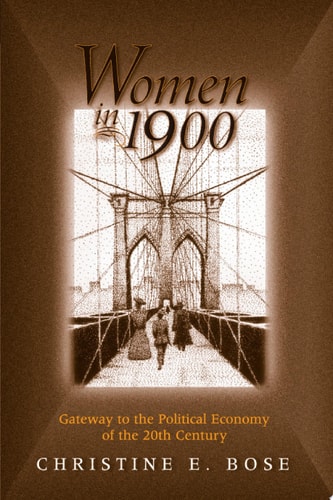
Women in 1900
0
0
As an Amazon Associate and affiliate partner, Menrva Books earns from qualifying purchases. Learn more
Author Description
This interdisciplinary volume provides a historical and international framework for understanding the changing role of women in the political economy of Latin America and the Caribbean. The contributors challenge the traditional policies, goals, and effects of development, and examine such topics as colonialism and women's subordination; the links to economic, social, and political trends in North America; the gendered division of paid and unpaid work; differing economic structures, cultural and class patterns; women's organized resistance; and the relationship of gender to class, race, and ethnicity/nationality.
Menrva's Summary
THE THESIS
This volume investigates the multifaceted roles and evolving status of women within the political economy of Latin America and the Caribbean at the turn of the 20th century. The book draws on interdisciplinary perspectives to challenge conventional development policies and their outcomes, exploring the enduring impacts of colonialism on women's subordination, the connections to North American socio-economic and political currents, and the intricate gendered divisions of both paid and unpaid labor. It further examines the influence of diverse economic structures, cultural norms, and class dynamics, alongside women's organized efforts to resist these conditions and the complex interplay of gender with class, race, and nationality.
THE SCOPE MAP
- Historical and international framework for understanding women's roles in the political economy.
- Analysis of colonialism's impact on women's subordination.
- Examination of links between regional trends and North American socio-economic and political developments.
- Exploration of the gendered division of paid and unpaid work.
- Discussion of differing economic structures, cultural patterns, and class distinctions.
- Case studies of women's organized resistance.
- Investigation into the relationship between gender, class, race, and ethnicity/nationality.
THE AUTHORITY PERSPECTIVE
This collection of essays offers a comprehensive examination of women's experiences within the political economies of Latin America and the Caribbean, providing a critical lens on development paradigms. The contributors' interdisciplinary approach allows for a nuanced understanding of the historical, social, and economic factors shaping women's lives and their resistance. The work is likely to be of significant interest to scholars and students in history, sociology, women's studies, and Latin American and Caribbean studies. It aims to foster a deeper appreciation for the complexities of gender, class, and race in shaping regional development.
Page Count:
272
Publication Date:
2010-06-04
Publisher:
Temple University Press
ISBN-10:
1592137822
ISBN-13:
9781592137824
Non-Fiction
History
Social Science
Caribbean Studies
Community Tags
Similar Books