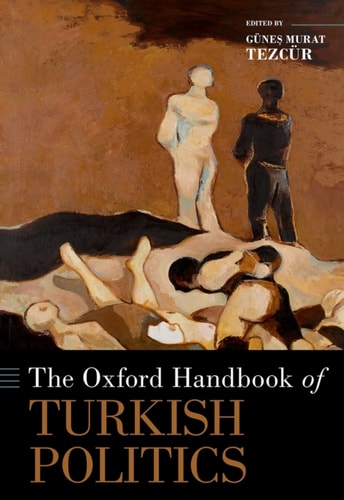
The Oxford Handbook of Turkish Politics
0
0
As an Amazon Associate and affiliate partner, Menrva Books earns from qualifying purchases. Learn more
Author Description
Turkey is a country with a history of multiparty electoral competition going back to 1950, longer than many other nations in the world. Until recently, it was often perceived as a model country that showed the feasibility of democratic governance in a Muslim-majority society. However, the rise of religious-nationalist populism and sociopolitical polarization has resulted in an authoritarian turn that has stifled political liberalization. Turkish foreign policy has had strong linkages with the West, but now exhibits a more independent and assertive position. Turkish national identity remains exclusionary, as citizens not belonging to the dominant ethnic and religious groups face various levels of discrimination. Political violence persists in the forms of state repression, insurgent attacks, and terrorism; nevertheless, Turkish civil society continues to be resilient. The economy has exhibited sustained levels of growth, though it remains vulnerable to crises. The Oxford Handbook of Turkish Politics includes in-depth analyses of all these issues in conversation with the broader scholarly literature on authoritarianism and democratization, political economy, electoral politics, politics of identity, social movements, foreign policy, and the politics of art. With contributions by leading experts, the Handbook is an authoritative source offering state-of-the-art reviews of the scholarship on Turkish politics. The volume is an analytical, comprehensive, and comparative overview of contemporary politics in a country that literally and figuratively epitomizes "being at the crossroads."
Menrva's Summary
THE THESIS
This volume investigates the complex trajectory of Turkish governance, examining how the nation transitioned from a model of democratic feasibility to a state defined by religious-nationalist populism and authoritarian shifts. The text synthesizes contributions from leading scholars to analyze the intersection of domestic political structures, economic volatility, and evolving foreign policy. By situating Turkey within broader comparative frameworks, the authors evaluate the resilience of civil society against the backdrop of persistent political violence and exclusionary identity politics.
THE SCOPE MAP
What You Will Find
- Comprehensive analysis of electoral politics and political liberalization trends since 1950.
- Theoretical frameworks regarding authoritarianism, democratization, and political economy.
- In-depth reviews of social movements, the politics of art, and national identity formation.
Scope Limits
- The text does not provide a day-to-day chronicle of current events or breaking news updates.
- It does not offer prescriptive policy solutions for the ongoing sociopolitical polarization.
THE AUTHORITY PERSPECTIVE
Experts identify this volume as a foundational reference for scholars and students seeking a rigorous, multi-faceted understanding of contemporary Turkish statecraft. Readers frequently note the academic density of the prose, which serves as a comprehensive resource for those engaged in comparative political research.
Page Count:
336
Publication Date:
2022-02-04
Publisher:
Oxford University Press Academic US
ISBN-10:
0190064919
ISBN-13:
9780190064914
History
Middle Eastern
State Politics
Sociology
General
Social Science
Elections
International relations
Government
Community Tags
Similar Books