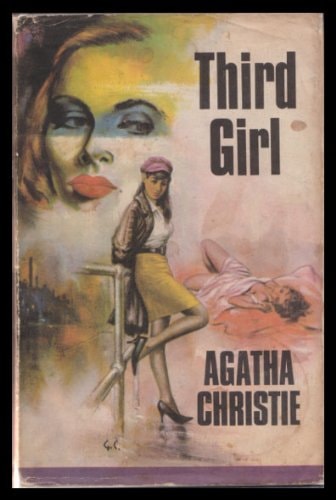
Third Girl
0
0
As an Amazon Associate and affiliate partner, Menrva Books earns from qualifying purchases. Learn more
Author Description
Three young women share a London flat. The first is a coolly efficient secretary. The second is an artist. The third interrupts Hercule Poirot’s breakfast confessing that she is a murderer—and then promptly disappears.Slowly, Poirot learns of the rumors surrounding the mysterious third girl, her family, and her disappearance. Yet hard evidence is needed before the great detective can pronounce her guilty, innocent, or insane.…
Menrva's Summary
THE PULSE
A young woman interrupts Hercule Poirot’s breakfast to confess to a murder, only to vanish before he can determine the truth of her claim. Poirot must navigate the complex social dynamics of 1960s London, moving between bohemian flats and established family estates to uncover the reality behind the girl's erratic behavior. He faces a web of deception involving hidden family secrets, potential mental instability, and a series of physical clues that suggest a far more dangerous situation than a simple confession. The narrative follows Poirot's methodical investigation as he attempts to distinguish between genuine guilt and the influence of external manipulation.
INSIDE THE PAGES
- Features the iconic detective Hercule Poirot in a later-career investigation.
- Explores the generational and cultural shifts of the 1960s London bohemian scene.
- Utilizes a classic 'locked-room' style mystery structure applied to a missing person case.
- Employs a methodical, evidence-based approach to psychological profiling.
- Incorporates a cast of characters with hidden motives and deceptive identities.
- Focuses on the contrast between traditional detective methods and modern social chaos.
- Features the recurring character Ariadne Oliver as a foil to Poirot.
- Builds tension through the ambiguity of the protagonist's mental state and reliability.
THE COLLECTIVE ECHO
This novel is widely regarded as a significant entry in the later period of Christie's bibliography, reflecting the author's attempt to integrate the changing social landscape of the 1960s into her traditional mystery framework. Critics have noted the ingenuity of the plot, which relies on the reader's ability to discern truth from the unreliable testimony of the central characters. The work is frequently cited for its successful pairing of Poirot with Ariadne Oliver, a dynamic that provides both humor and narrative depth. While some readers find the shift in tone to be a departure from her earlier works, the consensus remains that the puzzle-solving mechanics are as sharp as ever.
Page Count:
256
Publication Date:
1966-11-01
Publisher:
Collins
ISBN-10:
000244819X
ISBN-13:
9780002448192
Crime
Mystery
Classic Literature
English fiction
Traditional Detectives
Traditional
Detective
Mystery Thriller & Suspense
Fiction
Mystery & Detective
Crime & mystery
Subjects
Community Tags
Other Editions(10)




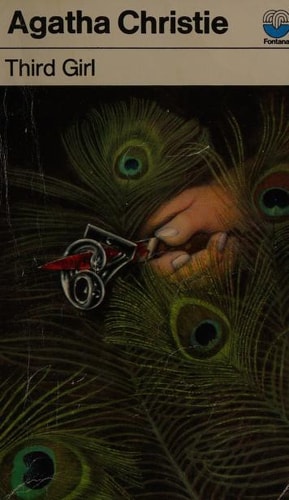


Similar Books






Reader Comments
Share Your Thoughts
No comments yet. Be the first to share your thoughts!