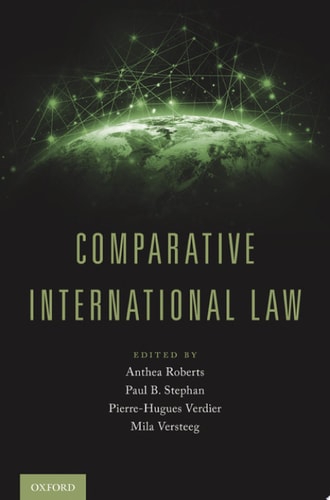
Comparative International Law
0
0
As an Amazon Associate and affiliate partner, Menrva Books earns from qualifying purchases. Learn more
Author Description
By definition, international law, once agreed upon and consented to, applies to all parties equally. It is perhaps the one area of law where cross-country comparison seems inappropriate, because all parties are governed by the same rules. However, as this book explains, states sometimes adhere to similar, and at other times, adopt different interpretations of the same international norms and standards. International legal rules are not a monolithic whole, but are the basis for ongoing contestation in which states set forth competing interpretations. International norms are interpreted and redefined by national executives, legislatures, and judiciaries. These varying and evolving interpretations can, in turn, change and impact the international rules themselves. These similarities and differences make for an important, but thus far, largely unexamined object of comparison. This is the premise for this book, and for what the editors call "comparative international law."This book achieves three objectives. The first is to show that international law is not a monolith. The second is to map the cross-country similarities and differences in international legal norms in different fields of international law, as well as their application and interpretation with regards to geographic differences. The third is to make a first and preliminary attempt to explain these differences. It is organized into three broad thematic sections, exploring: conceptual matters, domestic institutions and comparative international law, and comparing approaches across issue-areas. The chapters are authored by contributors who include leading international law and comparative law scholars with diverse backgrounds, experience, and perspectives.
Menrva's Summary
THE THESIS
This book investigates the core question of how and why states interpret and apply international legal norms differently despite the premise of universal application. The editors, a group of distinguished scholars in international and comparative law, argue that international law is not a monolithic entity but a site of ongoing contestation. They present a framework for 'comparative international law' that examines how domestic institutions—including executives, legislatures, and judiciaries—redefine international standards, thereby influencing the evolution of global legal rules.
THE SCOPE MAP
What You Will Find
- A conceptual framework for comparing international legal interpretations across different national jurisdictions.
- Analysis of how domestic institutional structures influence the application of international norms.
- Comparative studies across diverse issue-areas of international law.
Scope Limits
- The text does not provide an exhaustive survey of every existing international treaty or legal regime.
- It does not offer a definitive resolution to the conflicts between national sovereignty and international legal uniformity.
THE AUTHORITY PERSPECTIVE
Legal scholars and practitioners recognize this work as a foundational text for the emerging field of comparative international law. Readers frequently note the academic density of the prose and the rigorous interdisciplinary approach taken by the contributors.
Page Count:
636
Publication Date:
2018-01-12
Publisher:
Oxford University Press
ISBN-10:
0190697571
ISBN-13:
9780190697570
International Law
Comparative Law
Law
International relations
Community Tags
Similar Books