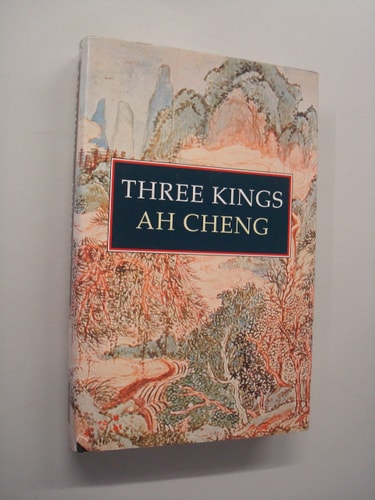
Three Kings
0
0
As an Amazon Associate and affiliate partner, Menrva Books earns from qualifying purchases. Learn more
Author Description
When the three novellas in The King of Trees were published separately in China in the 1980s, Ah Cheng fever spread across the country. Never before had a fiction writer dealt with the Cultural Revolution in such Daoist-Confucian terms, discarding Mao-speak, and mixing both traditional and vernacular elements with an aesthetic that emphasized not the hardships and miseries of those years, but the joys of close, meaningful friendships. In The King of Chess, a student s obsession with finding worthy chess opponents symbolizes his pursuit of the dao; in The King of Children made into an award-winning film by Chen Kaige, the director of Farewell My Concubine an educated youth is sent to teach at an impoverished village school where one boy s devotion to learning is so great he is ready to spend 500 days copying his teacher s dictionary; and in the title novella a peasant s innate connection to a giant primeval tree takes a tragic turn when a group of educated youth arrive to clear the mountain forest. As moving and enduring as the best of Jack London or Knut Hamsun, The King of Trees is as relevant today as it will be tomorrow.
Menrva's Summary
THE PULSE
These three novellas explore the intersection of individual human spirit and the rigid political landscape of China's Cultural Revolution. Through the lens of Daoist and Confucian philosophy, Ah Cheng examines the lives of educated youth and peasants who navigate state-mandated upheaval by prioritizing personal connection and intellectual pursuit. The narrative framework shifts between the internal focus of a chess obsessive, the pedagogical struggles of a rural teacher, and the ecological tragedy of a mountain community. Each story functions as a meditation on how meaning is constructed when traditional societal structures are dismantled by ideological fervor.
INSIDE THE PAGES
- Philosophical integration of Daoist and Confucian principles into contemporary settings
- Rejection of Maoist political rhetoric in favor of vernacular storytelling
- Focus on the aesthetic of friendship rather than the trauma of political hardship
- Symbolic use of chess as a metaphor for the pursuit of the dao
- Exploration of the tension between traditional rural life and state-led modernization
- Character-driven narratives that emphasize individual devotion and intellectual curiosity
- Atmospheric descriptions of the Chinese landscape and rural environments
- Episodic structure that highlights the quiet resilience of the human spirit
THE COLLECTIVE ECHO
Ah Cheng's work is widely regarded as a significant shift in Chinese literature for its departure from the standard political narratives of the 1980s. Critics often highlight the author's ability to maintain a calm, philosophical tone while depicting the chaotic backdrop of the Cultural Revolution. The novellas are frequently praised for their focus on the dignity of the individual and the preservation of cultural identity through personal relationships. Readers and scholars alike note that the collection offers a distinct perspective that avoids the typical tropes of victimhood, instead emphasizing the enduring nature of human connection and intellectual passion.
Page Count:
224
Publication Date:
1990-06-21
Publisher:
Vintage/Ebury (A Division of Random House Group)
ISBN-10:
0002710331
ISBN-13:
9780002710336
Contemporary
Novella
Literary
Modern fiction
Historical
Short Stories
Chinese
Community Tags
Similar Books