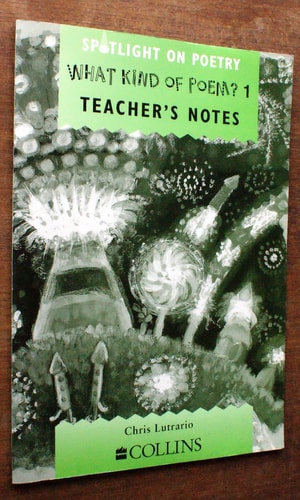
What Kind of Poem?: Teacher's Notes
0
0
As an Amazon Associate and affiliate partner, Menrva Books earns from qualifying purchases. Learn more
Author Description
The What Kind of Poem? collections feature a lively and diverse range of different poetic forms and styles. Each level is accompanied by Teacher's Notes that link poems to objectives in the National Literacy Framework, providing creative teaching ideas and photocopiable Activity Masters. Level 1 links to objectives for Years 1 and 2.The What Kind of Poem? collections feature a lively and diverse range of different poetic forms and styles including riddles, limericks, sonnets, haiku, cinquains, acrostics, epitaphs, shape poems, alphabet poems, conversations, diaries, monologues, lists, word play and poems that play with sound and invent new or nonsense words.Each collection is available as both a pupil reader and as a Big Book. The readers contain all the material in the Big Book plus some additional material, for example additional poems or full versions of poems that appear as extracts in the Big Book.There are 3 levels in each strand, corresponding to Years 1/2, Years 3/4 and Years 5/6. The poems have been carefully chosen to appeal to the age ranges.The collections meet the range of objectives for poetry and the National Literacy Strategy as specified in the Literacy Framework. They have been selected by David Orme and Brian Moses, two well-known children's poets.There are two other strands in the Spotlight on Poetry series: 'Poems Around the World', and 'Classic Poems'.
Menrva's Summary
THE THESIS
This resource provides a structured pedagogical framework for teaching diverse poetic forms to primary school students within the context of the National Literacy Strategy. The authors, established children's poets David Orme and Brian Moses, curate a selection of poems designed to align with specific curriculum objectives for Years 1 through 6. The text functions as a practical guide for educators, offering instructional strategies and reproducible materials to facilitate classroom engagement with various poetic structures.
THE SCOPE MAP
What You Will Find
- Pedagogical links to the National Literacy Framework objectives for primary education.
- Instructional strategies for teaching specific poetic forms including sonnets, haiku, and limericks.
- Photocopiable Activity Masters for classroom implementation.
- Creative teaching ideas for exploring word play, sound, and nonsense verse.
THE AUTHORITY PERSPECTIVE
The material presents as a highly structured, utilitarian tool designed for the specific constraints of the primary school classroom. Its focus on curriculum alignment and reproducible activities suggests a resource intended for consistent, practical application by literacy educators.
Page Count:
31
Publication Date:
1999-01-01
Publisher:
Collins Educational
ISBN-10:
0003103544
ISBN-13:
9780003103540
Poetry
Language Arts
Teaching Resources
Literary collections
Education
Community Tags
Similar Books