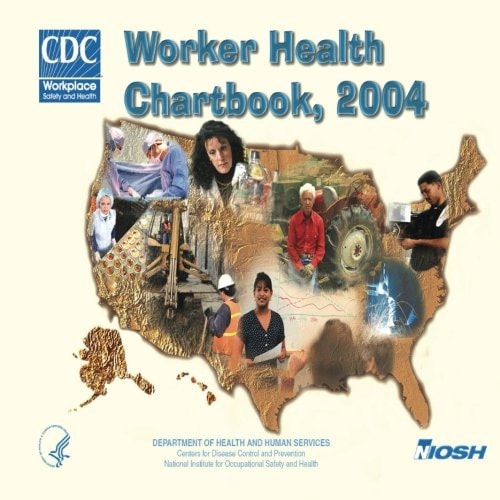
Worker Health Chartbook 2004
0
0
As an Amazon Associate and affiliate partner, Menrva Books earns from qualifying purchases. Learn more
Author Description
During the past 32 years, major advances have been made in recognizing, evaluating, and preventing occupational injuries, illnesses, and deaths. All have declined significantly. Despite these changes, unnecessary morbidity and mortality from occupational health hazards remain a significant burden to our workers, their families, and employers. The costs to our national health care system and the economy are substantial. More than 146.5 million people make up the civilian labor force, and more than 137.7 million of them were employed in 2003 according to the U.S. Department of Labor. About 7.3 million of these workers held more than one job. The U.S. labor force is becoming older and more diverse, and the supply of labor and jobs is shifting from goods-producing industries to services. Use of temporary, contract, and contingent laborers has increased along with alternative work arrangements such as job sharing and part-time work. These changes in the labor force and the nature of work present new challenges to assuring the safety and health of Americans in the workplace. This 2004 edition of the Worker Health Chartbook builds on the foundation established in the first edition, published in 2000. The Chartbook is intended as a resource for technical and nontechnical audiences, including agencies, organizations, employers, researchers, workers, and others with a need to know about occupational injury, illness, and death.
Menrva's Summary
THE THESIS
The Worker Health Chartbook 2004 provides a comprehensive statistical overview of occupational injuries, illnesses, and deaths in the United States. Building on previous editions, this resource details significant declines in occupational morbidity and mortality over the past three decades, yet highlights the persistent burden of workplace hazards on workers, families, and the economy. It addresses the evolving landscape of the American labor force, including an aging and diversifying workforce, shifts towards service industries, and the rise of alternative work arrangements, all of which present new challenges for safety and health.
THE SCOPE MAP
- Statistical data on occupational injuries, illnesses, and deaths in the U.S.
- Analysis of trends and advances in recognizing, evaluating, and preventing workplace hazards.
- Information on the costs of occupational health hazards to the national health care system and economy.
- Discussion of demographic and structural changes in the U.S. labor force.
- Identification of new challenges to worker safety and health posed by evolving work arrangements.
- Data and analysis intended for both technical and non-technical audiences.
THE AUTHORITY PERSPECTIVE
The Worker Health Chartbook 2004 is presented as a vital resource for understanding the state of occupational health in the United States. Its detailed statistical approach aims to inform a wide range of stakeholders, from government agencies and researchers to employers and workers. The publication emphasizes both progress made in workplace safety and the ongoing need to address occupational health hazards.
Page Count:
382
Publication Date:
2014-02-19
Publisher:
CreateSpace Independent Publishing Platform
ISBN-10:
1496001834
ISBN-13:
9781496001832
Science & Technology
Non-Fiction
Health
Statistics
Workplace Safety
Occupational Health
Public Health
Community Tags
Similar Books