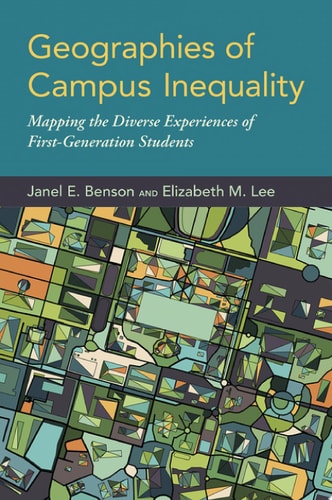
Geographies of Campus Inequality: Mapping the Diverse Experiences of First-Generation Students
0
0
As an Amazon Associate and affiliate partner, Menrva Books earns from qualifying purchases. Learn more
Author Description
In efforts to improve equity, selective college campuses are increasingly focused on recruiting and retaining first-generation students-those whose parents have not graduated from college. In Geographies of Campus Inequality, sociologists Benson and Lee argue that these approaches may fall short if they fail to consider the complex ways first-generation status intersects with race, ethnicity, and gender. Drawing on interview and survey data from selective campuses, the authors show that first-generation students do not share a universal experience. Rather, first-generation students occupy one of four disparate geographies on campus within which they negotiate academic responsibilities, build relationships, engage in campus life, and develop post-college aspirations. Importantly, the authors demonstrate how geographies are shaped by organizational practices and campus constructions of class, race, and gender. Geographies of Campus Inequality expands the understanding of first-generation students' campus lives and opportunities for mobility by showing there is more than one way to be first-generation.
Menrva's Summary
THE THESIS
How do institutional practices and intersectional identities shape the varied experiences of first-generation students on selective college campuses? Sociologists Janel E. Benson and Elizabeth M. Lee investigate the limitations of current equity initiatives that treat first-generation status as a monolithic identity. By analyzing qualitative interview data and survey results, the authors propose a framework of four distinct 'geographies' that categorize how students navigate academic, social, and professional environments based on the intersection of class, race, and gender.
THE SCOPE MAP
What You Will Find
- A four-part typology of student campus experiences
- Analysis of how organizational structures influence student mobility
- Qualitative interview data from students at selective institutions
- Quantitative survey data regarding student aspirations and social integration
Scope Limits
- The study focuses primarily on selective, four-year institutions rather than community colleges or non-selective universities
- The research does not provide a comprehensive policy manual for administrative implementation
THE AUTHORITY PERSPECTIVE
Scholars in higher education sociology view this work as a significant contribution to the study of student stratification and institutional culture. Readers frequently note the academic density of the prose, which is well-suited for researchers and administrators seeking a nuanced understanding of campus equity.
Page Count:
213
Publication Date:
2020-01-01
Publisher:
Oxford University Press
ISBN-10:
0190848170
ISBN-13:
9780190848170
Sociology
Higher Education
Organizations & Institutions
Minority Studies
Education
Professional Career & Trade
Academic Research
Community Tags
Similar Books