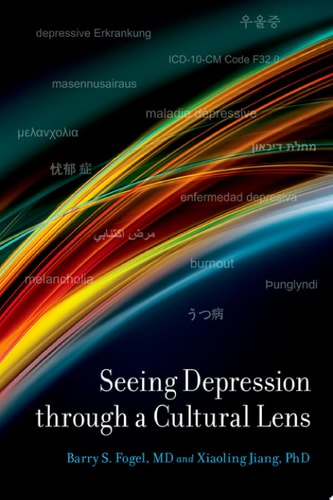
Seeing Depression Through a Cultural Lens
0
0
As an Amazon Associate and affiliate partner, Menrva Books earns from qualifying purchases. Learn more
Author Description
Seeing Depression Through a Cultural Lens, the collaborative work of a clinical neuroscientist and a scholar of comparative culture, examines the effects of cultural identity on the epidemiology, phenomenology, and narratives of depression, the bipolar spectrum, and suicide. Culture is associated with emotional communication style, 'idioms of distress,' the conception of depression and of bipolar disorders, and how people with mood disorders might be stigmatized. It is linked to structural factors--environmental, social, and economic circumstances--that create or mitigate the risk of depression, sometimes precipitate episodes of illness, and facilitate or impede treatment. Culture shapes depressed people's willingness to disclose or acknowledge their condition and to seek care, their relationships with clinicians, and their acceptance or rejection of specific treatments. Cultural context is essential to understanding suicide. It underlies people's motives for suicide, factors that promote or prevent suicide, the social acceptability of death by suicide, and availability of lethal means of self-harm.Cultural identity is always intersectional, comprising elements related to race and ethnicity; gender; age, generation, and life stage; education; social class; occupation; migrant or minority status; region of residence; and religious belief and practice. This book explores the implications of each of these dimensions using salient concepts from the social sciences, memorable narratives from literature, film, and the clinic, and quantitative findings from epidemiology and psychometrics. It offers readers a framework for culturally aware assessment and management of depression, bipolarity, and suicidal risk in diverse individuals and populations.
Menrva's Summary
THE THESIS
This work investigates how cultural identity fundamentally shapes the manifestation, interpretation, and clinical management of depression, bipolar disorders, and suicide. Barry S. Fogel, a clinical neuroscientist, and Xiaoling Jiang, a scholar of comparative culture, synthesize clinical data with social science frameworks to argue that mood disorders cannot be understood in isolation from the patient's cultural and social environment. They propose a model of culturally aware practice that accounts for intersectional identities and the diverse ways individuals communicate distress.
THE SCOPE MAP
What You Will Find
- Analysis of cultural idioms of distress and emotional communication styles
- Examination of intersectional factors including race, gender, class, and migration status
- Integration of epidemiological data with qualitative narratives from literature and film
- Frameworks for assessing and managing suicidal risk within diverse populations
Scope Limits
- Does not provide a comprehensive clinical manual for specific pharmacological interventions
- Does not cover every global culture in equal depth, focusing instead on representative case studies and social science concepts
THE AUTHORITY PERSPECTIVE
Experts identify this text as a necessary bridge between neurobiological psychiatry and the social sciences. Readers frequently note the academic density of the prose, which is balanced by illustrative case studies that make the theoretical concepts accessible to clinicians and students alike.
Page Count:
848
Publication Date:
2024-01-01
Publisher:
Oxford University Press
ISBN-10:
0190850078
ISBN-13:
9780190850074
Psychology
Self-help
Schools & Teaching
Psychiatry
Sociology
Mental Health
Medical Anthropology
Community Tags
Other Editions(2)
Similar Books













Reader Comments
Share Your Thoughts
No comments yet. Be the first to share your thoughts!