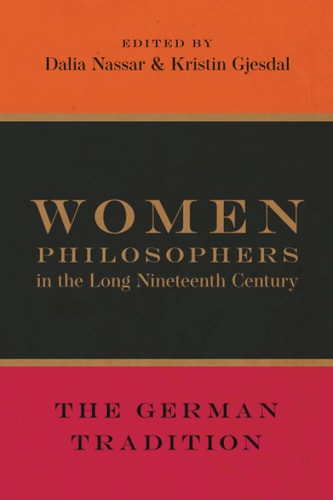
Women Philosophers in the Long Nineteenth Century: The German Tradition
0
0
As an Amazon Associate and affiliate partner, Menrva Books earns from qualifying purchases. Learn more
Author Description
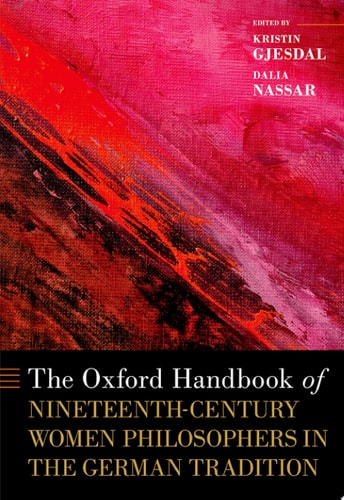
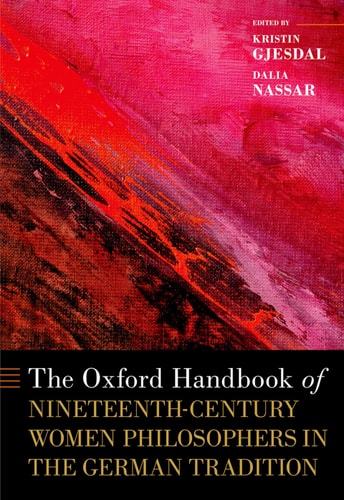
The long nineteenth-century--the period beginning with the French Revolution and ending with World War I--was a transformative period for women philosophers in German-speaking countries and contexts. The period spans romanticism and idealism, socialism, Nietzscheanism, and phenomenology, philosophical movements we most often associate with Hegel, Schopenhauer, Kierkegaard, Nietzsche, and Marx--but rarely with women. Yet women philosophers not only contributed to these movements, but also spearheaded debates about their social and political implications. While today their works are less well-known than those of their male contemporaries, many of these women philosophers were widely-read and influential in their own time. Their contributions shed important new light on nineteenth-century philosophy and philosophy more generally: revealing the extent to which various movements which we consider distinct were joined, and demonstrating the degree to which philosophy can transform lives and be transformed by lived experiences and practices.In the nineteenth century, women philosophers explored a wide range of philosophical topics and styles. Working within and in dialogue with popular philosophical movements, women philosophers helped shape philosophy's agenda and provided unique approaches to existential, political, aesthetic, and epistemological questions. Though largely deprived formal education and academic positions, women thinkers developed a way of philosophizing that was accessible, intuitive, and activist in spirit. The present volume makes available to English-language readers―in many cases for the first time―the works of nine women philosophers, with the hope of stimulating further interest in and scholarship on their works. The volume includes a comprehensive introduction to women philosophers in the nineteenth century and introduces each philosopher and her position. The translations are furnished with explanatory footnotes. The volume is designed to be acces
Menrva's Summary
THE THESIS
This volume investigates the overlooked contributions of women philosophers in German-speaking contexts during the long nineteenth century, challenging the male-dominated canon of the era. Editors Dalia Nassar and Kristin Gjesdal provide a scholarly framework that situates these thinkers within major movements such as Romanticism, idealism, and phenomenology. By presenting primary texts alongside critical introductions, the authors argue that these women were not peripheral figures but active participants who shaped the philosophical agenda of their time.
THE SCOPE MAP
What You Will Find
- Primary source translations of works by nine distinct women philosophers.
- Contextual analysis of philosophical movements including socialism, Nietzscheanism, and idealism.
- Explanatory footnotes and comprehensive introductions for each featured thinker.
Scope Limits
- The volume focuses exclusively on German-speaking contexts and the long nineteenth century.
- It does not provide an exhaustive survey of every female thinker of the period, but rather a curated selection of nine figures.
THE AUTHORITY PERSPECTIVE
Experts recognize this volume as a significant contribution to the recovery of marginalized voices in the history of philosophy. Readers frequently note that the text serves as a valuable resource for both academic researchers and students seeking to broaden their understanding of the nineteenth-century philosophical landscape.
Page Count:
334
Publication Date:
2021-08-02
Publisher:
Oxford University Press
ISBN-10:
019086804X
ISBN-13:
9780190868048
Philosophy
German Philosophy
Philosophy history
Intellectual History
Philosophy German
Women in Philosophy
Nineteenth century
Community Tags
Similar Books

Reader Comments
Share Your Thoughts
No comments yet. Be the first to share your thoughts!