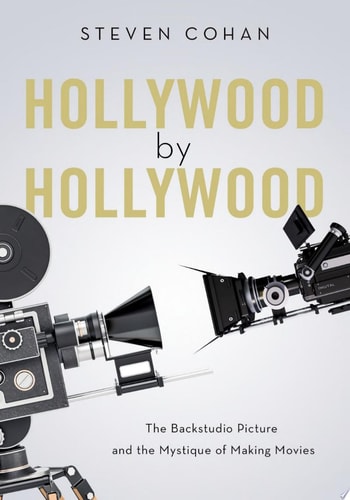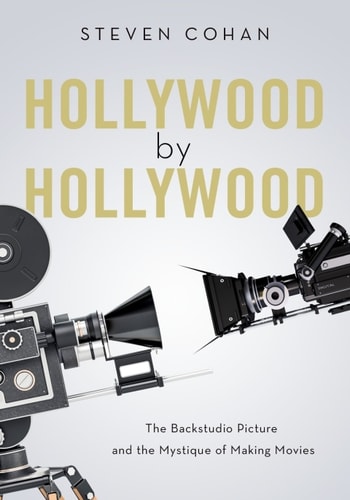
Hollywood by Hollywood: The Backstudio Picture and the Mystique of Making Movies
0
0
As an Amazon Associate and affiliate partner, Menrva Books earns from qualifying purchases. Learn more
Author Description
The backstudio picture, or the movie about movie-making, is a staple of Hollywood film production harking back to the silent era and extending to the present day. What gives backstudios their coherence as a distinctive genre, Steven Cohan argues in Hollywood by Hollywood, is their fascination with the mystique of Hollywood as a geographic place, a self-contained industry, and a fantasy of fame, leisure, sexual freedom, and modernity. Yet by the same token, if backstudio pictures have rarely achieved blockbuster box-office success, what accounts for the film industry's interest in continuing to produce them? The backstudio picture has been an enduring genre because, aside from offering a director or writer a chance to settle old scores, in branding filmmaking with the Hollywood mystique, the genre solicits consumers' strong investment in the movies. Whether inspiring the "movie crazy" fan girls of the early teens and twenties or the wannabe filmmakers of this century heading to the West Coast after their college graduations, backstudios have given emotional weight and cultural heft to filmmaking as the quintessential American success story. But more than that, a backstudio picture is concerned with shaping perceptions of how the film industry works, with masking how its product depends upon an industrial labor force, including stardom, and with determining how that work's value accrues from the Hollywood brand stamped onto the product. Cohan supports his well theorized and well researched claims with nuanced discussions of over fifty backstudios, some canonical and well-known, and others obscure and rarely seen. Covering the hundred-year timespan of feature length film production, Hollywood by Hollywood offers an illuminating perspective for considering anew the history of American movies.
Menrva's Summary
THE THESIS
What accounts for the enduring production of the 'backstudio' film genre despite its frequent lack of blockbuster commercial success? Steven Cohan, a scholar of film and cultural history, investigates the industry's persistent fascination with self-reflexive narratives. He argues that these films function as a branding mechanism, transforming the industrial labor of filmmaking into a potent cultural mythology of fame, modernity, and the American success story.
THE SCOPE MAP
What You Will Find
- Analysis of over fifty films spanning the silent era to the present day.
- A theoretical framework examining the intersection of industrial labor, stardom, and audience perception.
- Historical context regarding the evolution of the 'Hollywood' brand.
Scope Limits
- The text focuses primarily on the thematic and industrial implications of the genre rather than providing a comprehensive box-office financial history.
THE AUTHORITY PERSPECTIVE
Scholars and film historians recognize this work as a rigorous examination of the self-reflexive nature of the film industry. Readers frequently note the academic density of the prose and the breadth of the author's filmography analysis.
Page Count:
288
Publication Date:
2018-01-01
Publisher:
Oxford University Press
ISBN-10:
0190865806
ISBN-13:
9780190865801
Non-Fiction
History
Film Studies
Film & Video
American History
Media Studies
Motion pictures
Cinema History
Community Tags
Similar Books