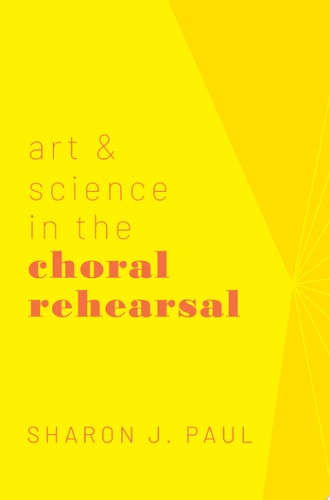
Art & Science in the Choral Rehearsal
0
0
As an Amazon Associate and affiliate partner, Menrva Books earns from qualifying purchases. Learn more
Author Description
In recent decades, cognitive neuroscience research has increased our understanding of how the brain learns, retains, and recalls information. At the same time, social psychologists have developed insights into group dynamics, exploring what motivates individuals in a group to give their full effort, or conversely, what might instead inspire them to become free loaders. Art and Science in the Choral Rehearsal explores the idea that choral conductors who better understand how the brain learns, and how individuals within groups function, can lead more efficient, productive, and enjoyable rehearsals. Armed with this knowledge, conductors can create rehearsal techniques which take advantage of certain fundamental brain and social psychology principles. Through such approaches, singers will become increasingly engaged physically and mentally in the rehearsal process. Art and Science in the Choral Rehearsal draws from a range of scientific studies to suggest and encourage effective, evidence-based techniques, and can help serve to reset and inspire new approaches toward teaching. Each chapter outlines exercises and creative ideas for conductors and music teachers, including the importance of embedding problem solving into rehearsal, the use of multiple entry points for newly acquired information, techniques to encourage an emotional connection to the music, and ways to incorporate writing exercises into rehearsal. Additional topics include brain-compatible teaching strategies to complement thorough score study, the science behind motivation, the role imagination plays in teaching, the psychology of rehearsal, and conducting tips and advice. All of these brain-friendly strategies serve to encourage singers' active participation in rehearsals, with the goal of motivating beautiful, inspired, and memorable performances.
Menrva's Summary
THE THESIS
How can choral conductors integrate principles of cognitive neuroscience and social psychology to optimize rehearsal efficiency and singer engagement? Sharon J. Paul, a conductor and educator, synthesizes current research in brain science and group dynamics to provide a framework for choral instruction. The text argues that by aligning rehearsal techniques with how the human brain processes information and how individuals function within collective environments, conductors can foster higher levels of motivation and musical output. The book serves as a bridge between academic research and practical application in the music studio.
THE SCOPE MAP
What You Will Find
- Cognitive strategies for information retention and recall
- Social psychology frameworks regarding group motivation and effort
- Practical exercises for embedding problem solving into rehearsals
- Techniques for fostering emotional connection to musical scores
- Brain-compatible teaching methodologies for music educators
Scope Limits
- The text does not provide a comprehensive history of choral music or conducting technique
- It does not cover vocal pedagogy or physiological voice training
THE AUTHORITY PERSPECTIVE
Practitioners in the field of music education frequently identify this work as a valuable resource for modernizing rehearsal pedagogy through evidence-based practice. Experts note that the text successfully translates complex psychological concepts into actionable strategies for conductors of all experience levels.
Page Count:
235
Publication Date:
2020-01-01
Publisher:
Oxford University Press
ISBN-10:
019086379X
ISBN-13:
9780190863791
Psychology
Music
Neuroscience
Allied Health
Humanities
Medical
Education
Choral Conducting
Music
Professional Career & Trade
Choral
Pedagogy
Community Tags
Other Editions(3)
Similar Books




Reader Comments
Share Your Thoughts
No comments yet. Be the first to share your thoughts!