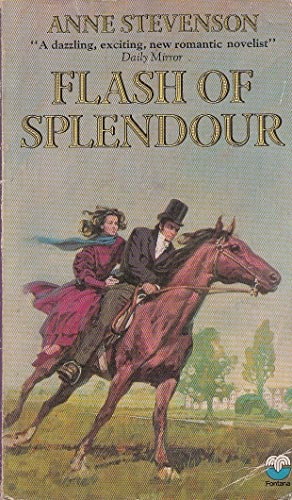
Flash of Splendour
0
0
As an Amazon Associate and affiliate partner, Menrva Books earns from qualifying purchases. Learn more
Author Description
The quiet village of Rivington in Warwickshire is the setting for this absorbing novel of mystery and romance. It is 1848, a year of revolutions, when young Dr. Hugh Radlett returns to the scene of his boyhood and falls in love with Anne Torrance. But into their lives come two men - Godfrey Bullivant, a man obsessed, who invades the peaceful countryside with his hated railway, and Laszlo Bathory, an exotic, mysterious figure involved in revolution. Against an ever-changing canvas, surrounded by such fascinating characters as the Hungarian Countess Sophia, the prim Esther Wharton, the pathetic Toms, each comes to find his own destiny.
Menrva's Summary
THE PULSE
The arrival of two disruptive outsiders in 1848 Warwickshire forces a young doctor to confront the fragility of his romantic aspirations and the shifting political landscape of his home. Dr. Hugh Radlett returns to Rivington seeking stability, only to find his affections for Anne Torrance complicated by the arrival of a railway-obsessed industrialist and a revolutionary exile. As the quiet village becomes a microcosm of the era's broader social upheavals, Hugh must navigate the tension between his personal desires and the encroaching forces of modernity and political unrest. The narrative unfolds through a traditional third-person perspective that balances intimate character dynamics with the external pressures of a changing world.
INSIDE THE PAGES
- Mid-nineteenth-century rural setting in Warwickshire
- Exploration of the social impact of the industrial railway expansion
- Romantic rivalry involving a doctor, a local woman, and a foreign revolutionary
- Integration of historical 1848 revolutionary themes into a village mystery
- Character-driven focus on personal destiny and social expectation
- Use of the pastoral landscape as a contrast to encroaching industrialization
- Episodic structure highlighting the arrival of distinct, disruptive archetypes
- Emphasis on the tension between traditional village life and external political forces
THE COLLECTIVE ECHO
This novel presents a traditional approach to the historical romance genre, utilizing the backdrop of 1848 to heighten the stakes of its central love triangle. The narrative structure suggests a focus on the contrast between the insular nature of village life and the volatile, revolutionary spirit of the mid-nineteenth century. Readers likely encounter a pacing that prioritizes character development and atmospheric detail over rapid plot progression. The work functions as an examination of how individual lives are redirected by the arrival of external agents of change, whether those agents represent industrial progress or political upheaval.
Page Count:
224
Publication Date:
1970-01-01
Publisher:
Fontana
ISBN-10:
000612352X
ISBN-13:
9780006123521
Romance
Mystery
Historical Fiction
Fiction
Victorian