The Mandarins
0
0
As an Amazon Associate and affiliate partner, Menrva Books earns from qualifying purchases. Learn more
Author Description
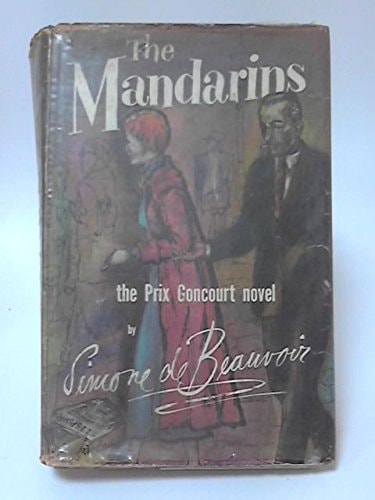
In her most famous novel, Simone de Beauvoir does not flinch in her look at Parisian intellectual society at the end of the Second World War. Drawing on those who surrounded her -- Jean-Paul Sartre, Albert Camus, Arthur Koestler -- and her passionate love affair with Nelson Algren, Beauvoir dissects the emotional and philosophical currents of her time. At once an engrossing drama and an intriguing political tale, The Mandarins is the emotional odyssey of a woman torn between her inner desire and her public life.The Mandarins won France's highest literary prize, the Prix Goncourt.
Menrva's Summary
THE PULSE
In the wake of the Second World War, a circle of Parisian intellectuals struggles to reconcile their idealistic political convictions with the harsh, shifting realities of a fractured post-liberation society. The protagonist, Anne Dubreuilh, navigates the complex intersection of her professional life as a psychoanalyst and her personal search for meaning amidst the disillusionment of her peers. She faces the mounting pressure of choosing between her commitment to radical political activism and the preservation of her own emotional autonomy. The narrative, presented through a sophisticated lens, examines the fragility of human relationships when tested by ideological divergence and the weight of historical trauma.
INSIDE THE PAGES
- Exploration of existentialist philosophy and its practical application in post-war politics
- Detailed character studies based on prominent mid-century intellectual figures
- Examination of the tension between private desire and public responsibility
- Non-linear reflection on the moral compromises required by political alignment
- Intimate portrayal of the psychological toll of the French Resistance
- Analysis of the shifting power dynamics within Parisian social circles
- Epistolary elements reflecting the protagonist's internal monologue and correspondence
- Focus on the erosion of post-war optimism as the Cold War begins to take shape
THE COLLECTIVE ECHO
This work is widely regarded as a definitive portrait of the post-war French intellectual climate, capturing the specific anxieties of a generation grappling with the aftermath of occupation. Critics frequently highlight the novel's success in blending personal narrative with the broader philosophical debates that defined the era. The text is noted for its rigorous examination of the moral dilemmas faced by those who sought to influence the political trajectory of a recovering nation. Readers often point to the depth of the characterizations as a primary strength, noting how the author avoids simple moral binaries in favor of a nuanced exploration of human fallibility.
Page Count:
763
Publication Date:
1975-01-01
Publisher:
Fontana
ISBN-10:
0006135404
ISBN-13:
9780006135401
Historical Fiction
Literary Fiction
Literary
Political fiction
Literature & Fiction
Philosophical
French literature