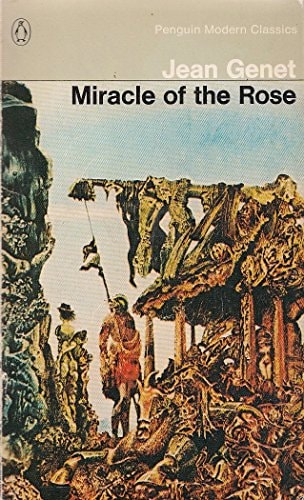
Miracle of the Rose
0
0
As an Amazon Associate and affiliate partner, Menrva Books earns from qualifying purchases. Learn more
Author Description
This nightmarish account of prison life during the German occupation of France is dominated by the figure of the condemned murderer Harcamone, who takes root and bears unearthly blooms in the ecstatic and brooding imagination of his fellow prisoner Genet.
Menrva's Summary
THE PULSE
The narrative centers on the narrator's obsessive fixation on a condemned murderer named Harcamone within the confines of a French prison. The protagonist navigates the brutal hierarchy of incarceration while projecting his internal desires and spiritual longings onto the figure of the prisoner awaiting execution. The narrative framework operates as a non-linear, stream-of-consciousness exploration of memory, where the physical reality of the prison cell dissolves into a surreal landscape of erotic and religious imagery. The narrator struggles to reconcile his own identity with the mythic status he assigns to his fellow inmate, creating a tension between the harsh material conditions of the occupation and the internal liberation of the imagination.
INSIDE THE PAGES
- Non-linear, fragmented narrative structure
- Intense focus on homoerotic desire and ritual
- Blending of religious iconography with criminal subculture
- First-person perspective rooted in autobiographical experience
- Exploration of the intersection between power and submission
- Vivid, often grotesque sensory descriptions of prison life
- Philosophical inquiries into the nature of sainthood and evil
- Use of dream-like sequences to transcend physical confinement
THE COLLECTIVE ECHO
Discussion often centers on the author's ability to transform the squalor of prison life into a space of profound aesthetic and spiritual transformation. Readers frequently highlight the challenging, dense prose style that demands careful attention to the shifting boundaries between reality and hallucination. Critics often examine how the text functions as an exploration of the criminal as a figure of saintly devotion, challenging conventional moral frameworks. The work is noted for its uncompromising honesty regarding the narrator's internal state, making it a significant contribution to mid-twentieth-century French literature. Many readers find the atmospheric intensity of the writing to be the defining characteristic of the experience.
Page Count:
288
Publication Date:
1965-01-01
Publisher:
Penguin
ISBN-10:
0140033041
ISBN-13:
9780140033045
Literary Fiction
Autobiographical fiction
Existentialism
French literature
Literary
Prison Literature