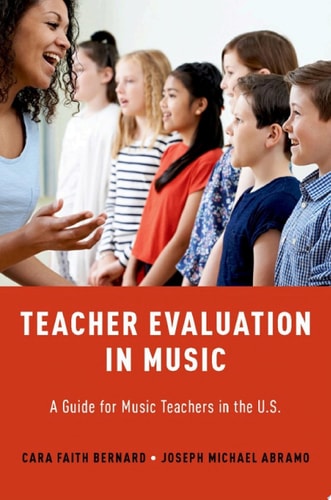
Teacher Evaluation in Music: A Guide for Music Teachers in the U.S.
0
0
As an Amazon Associate and affiliate partner, Menrva Books earns from qualifying purchases. Learn more
Author Description
Teacher Evaluation in Music: A Guide for Music Teachers in the U. S. aims to help music teachers navigate the controversial terrain of teacher evaluation. Rather than entering the debate on policy divorced from practice, this book is intended as a pragmatic approach to help music teachers to thrive within teacher evaluation systems and as a way to improve practice. Using Shulman's concept of content knowledge, general pedagogical knowledge, and pedagogical content knowledge, this book strives to help music teachers find a balance between advocating for themselves and their programs and for using teacher evaluation to improve their teaching. The book covers history of policy and law of teacher evaluation and the competing uses of teacher evaluation to rate teachers or as a professional development tool. The descriptions of policies, laws, and competing uses are approached in a way to help music teachers use teacher evaluation for their benefit to grow as professionals. This book has chapters devoted to giving detailed and specific strategies in key areas that research has suggested music teachers struggle to implement: questioning, literacy, differentiated instruction, and assessment. Complimenting these key areas are sample lesson plans which apply the strategies of questioning, differentiation, literacy, and assessment discussed in each chapter. These lessons serve as a resource and guide for teachers to develop their own lessons and improve their practice. The final chapter gives guidance on how music teachers may talk to administrators and evaluators to make teacher evaluation productive. Through these detailed descriptions of understanding teacher evaluation, talking to evaluators, and improving practice, music teachers may not just survive but thrive in these systems of accountability.
Menrva's Summary
THE THESIS
How can music educators effectively navigate and leverage standardized teacher evaluation systems to improve their professional practice and advocate for their programs? Authors Cara Faith Bernard and Joseph Michael Abramo, both established scholars in music education, utilize Shulman’s framework of content and pedagogical knowledge to bridge the gap between policy and classroom reality. The text argues that evaluation systems, while often viewed as punitive, can be repurposed as tools for professional growth and institutional advocacy when approached with strategic understanding.
THE SCOPE MAP
What You Will Find
- Historical overview of teacher evaluation policy and law in the United States
- Pedagogical strategies for questioning, literacy, differentiated instruction, and assessment
- Practical application through sample lesson plans
- Communication frameworks for engaging with administrators and evaluators
Scope Limits
- Does not provide a universal policy manual for every specific state or district mandate
- Does not focus on general classroom management outside the context of formal evaluation criteria
THE AUTHORITY PERSPECTIVE
Experts identify this work as a practical resource for music educators seeking to reconcile administrative accountability with artistic instruction. Readers frequently note the balance between theoretical policy analysis and the inclusion of actionable, classroom-ready strategies.
Page Count:
227
Publication Date:
2019-01-01
Publisher:
Oxford University Press
ISBN-10:
0190867124
ISBN-13:
9780190867126
Humanities
Professional Development
Education
Professional Career & Trade
Music Education
Educational Policy
Teaching Methods
Community Tags
Other Editions(2)
Similar Books



Reader Comments
Share Your Thoughts
No comments yet. Be the first to share your thoughts!