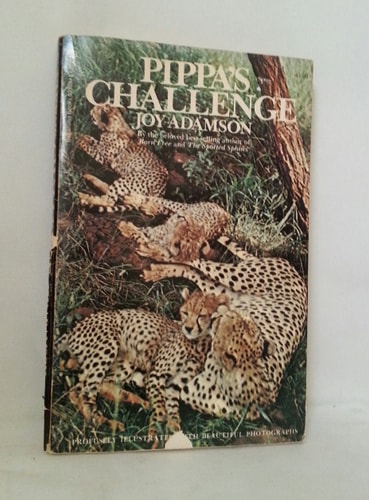
Pippa's Challenge
0
0
As an Amazon Associate and affiliate partner, Menrva Books earns from qualifying purchases. Learn more
Author Description
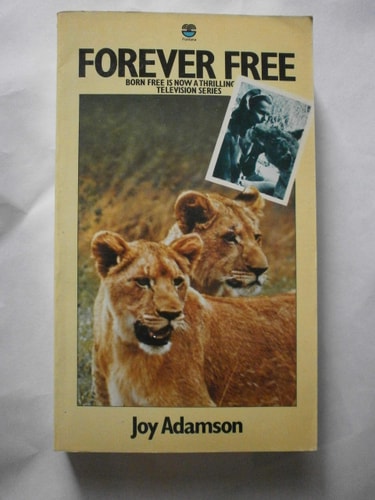
Apparently sensitive to snipes from scientific quarters regarding her unique relationship with wild creatures, the dedicated Ms. Adamson, here provides more rigorous cheetah observation than was evident in the last Pippa saga, The Spotted Sphinx (1969). Nevertheless she says, "The scientific method of studying animals... is purely objective and cuts out all personal relationships between animals and man... my method... is subjective." Since she couldn't spend 24 hours a day with the cheetah and her cubs (it would have disturbed Pippa's routine) she puts in as many daylight hours with them as she can. There are days and days of tracking, as Ms. Adamson observes mating, nursing, feeding, cub-training and curious behavior which she interprets as a variety of animal ESP. (Could Pippa have known a mate was on the way? Could the cub have sensed the lion "Boy" was injured?) There are occasional visits to George Adamson and his pride of lions, wild and/or semi-domesticated, and both Joy and George face the heartbreak of enforced removal from the African preserve. Joy has other personal trials as well — an auto accident results in serious surgery and painful rehabilitation. But Pippa's death is the most difficult to bear.... With copious color and black-and-white photographs — for the reliable following and for those who will forgive a certain shrill sentimentality out of deference to Ms. Adamson's wholesome respect for the ways of the wild.
Menrva's Summary
THE THESIS
This work investigates the complex, subjective relationship between a human observer and a wild cheetah, questioning whether personal connection can coexist with rigorous scientific observation. Joy Adamson, a naturalist known for her work with big cats, documents her extended field observations of the cheetah Pippa and her cubs in their natural African habitat. She contrasts her subjective, immersive methodology with traditional objective scientific practices, while navigating the logistical and emotional challenges of wildlife conservation and personal health crises.
THE SCOPE MAP
What You Will Find
- Longitudinal field observations of cheetah behavior, including mating, nursing, and cub-rearing.
- Comparative analysis of subjective versus objective wildlife research methodologies.
- Documentation of the environmental and political pressures facing African wildlife preserves.
- Personal reflections on the intersection of human life and animal behavior, including observations on animal intuition.
THE AUTHORITY PERSPECTIVE
The text provides a detailed, albeit highly personal, account of wildlife observation that prioritizes emotional connection over clinical detachment. The narrative serves as a significant record of the author's specific methodology and the challenges inherent in long-term field studies of large predators.
Page Count:
224
Publication Date:
1973-01-01
Publisher:
FONTANA
ISBN-10:
0006136001
ISBN-13:
9780006136002
Animals
Biography
Memoir
Nature
Animals
Science & Math
Nature
Africa
Wildlife
Big Cats
Community Tags
Other Editions(3)

Similar Books