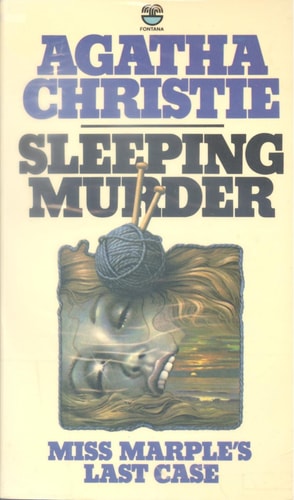
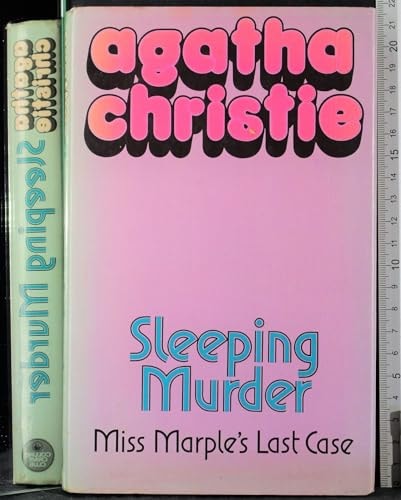
Sleeping Murder
0
0
As an Amazon Associate and affiliate partner, Menrva Books earns from qualifying purchases. Learn more
Author Description
"Let sleeping murder lie": this is the proverb (a variation on "Let sleeping dogs lie") which is not obeyed by twenty-one-year-old New Zealander Gwenda Reed, who has recently married and now comes to England to settle down there. While her husband, Giles, is out of the country, she buys a house for them and starts recalling memories which make her start to think that perhaps she had lived in the house before. She knows the pattern of the old wallpaper they find on the walls, the location of a now covered over doorway, a set of steps in the garden that are not where they should be, and so on. When she begins to remember seeing someone murdered at the bottom of the staircase however, she is convinced she is going mad. Miss Marple however has an explanation not only for why she may be having these memories but also solves the mystery of the murder victim and her murderer. Sleeping Murder chronicles Miss Marple’s final case. Although Agatha Christie wrote it before Nemesis, it was not published until after her death in 1976. It is thought to have been written in the early 1940s, although the exact date has been debated
Menrva's Summary
THE PULSE
When a young woman begins to experience vivid, unsettling memories of a murder in her new home, she must confront the possibility of her own deteriorating sanity. Gwenda Reed, a recent arrival from New Zealand, finds herself haunted by architectural details and traumatic visions that suggest she has occupied her English house before. As these memories coalesce into the image of a strangulation, she turns to the elderly Miss Marple to untangle the truth. The narrative unfolds through a classic investigative framework, balancing Gwenda's psychological distress with the methodical, observant inquiries of the detective. The story operates within the constraints of a traditional whodunit, where the past acts as a physical weight upon the present.
INSIDE THE PAGES
- A central mystery involving a cold case murder discovered through repressed memory.
- The inclusion of Miss Marple as the primary investigator, utilizing her keen observations of human nature.
- A domestic setting that serves as a repository for hidden history and architectural secrets.
- A narrative structure that emphasizes the intersection of psychological tension and logical deduction.
- The exploration of the proverb regarding sleeping dogs as a thematic anchor for the plot.
- A focus on the transition from personal confusion to external investigation.
- The use of a classic English village atmosphere to contrast with the dark nature of the crime.
- A resolution that relies on the careful piecing together of disparate, seemingly unrelated clues.
THE COLLECTIVE ECHO
This novel is widely recognized as the final case featuring Miss Marple, written by Agatha Christie during the 1940s but held for posthumous publication. Critics often highlight the book's unique position in the Christie canon, noting the deliberate contrast between the domestic setting and the underlying violence. Readers frequently discuss the effectiveness of the memory-based plot device and how it distinguishes this entry from other Marple mysteries. The work is generally regarded as a sophisticated example of the author's ability to weave psychological elements into the traditional detective format. Its status as a posthumous release adds a layer of historical interest for those examining the evolution of the detective genre.
Page Count:
192
Publication Date:
1976-10-01
Publisher:
Fontana Press
ISBN-10:
0006145906
ISBN-13:
9780006145905
Fiction
Crime
Mystery
Mystery Thriller & Suspense
Women Sleuths
England
classic
Traditional Detectives
Subjects
Mystery fiction
Detective
Jane Marple Fictitious character
Crime & mystery
Classic fiction
Community Tags
Other Editions(6)

Similar Books








Reader Comments
Share Your Thoughts
No comments yet. Be the first to share your thoughts!