Hobgoblin
0
0
As an Amazon Associate and affiliate partner, Menrva Books earns from qualifying purchases. Learn more
Author Description
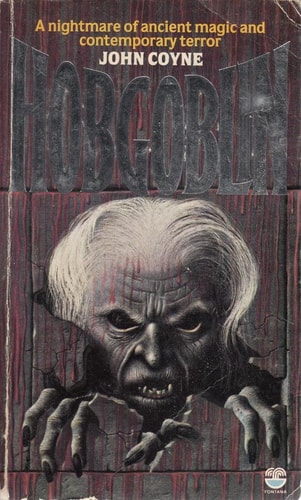
Hobgoblin by John Coyne is a 1981 book about Scott Gardiner, a teenaged boy who becomes obsessed with "Hobgoblin," a fantasy roleplaying game based on Irish mythology, as his life in the game & in reality slowly blend. Like the contemporary Mazes & Monsters, this is a species of problem novel (altho not aimed at young adult readers) by an established writer, which treats the playing of roleplaying games as indicative of deep neurotic needs. In both books, the protagonist is, or at least appears to be, suffering from schizophrenia or some analogous condition; in both books, the attainment of mature adulthood is accompanied by the abandonment of roleplaying games. Like the Jaffe book, this was published at the height of Dungeons & Dragons' popularity & soon after the intense media coverage of the Egbert steam tunnel incident (urban myths wherein roleplaying gamers enacting live action role-playing games perish, often in the utility tunnels below their university campuses).
Menrva's Summary
THE PULSE
A teenager’s deepening obsession with a fantasy roleplaying game triggers a dangerous dissolution of the boundaries between his reality and the game’s mythic world. Scott Gardiner finds himself increasingly consumed by the mechanics and lore of 'Hobgoblin,' a game rooted in Irish mythology that begins to dictate his actions and perceptions. As he navigates the pressures of his environment, the game serves as both an escape and a catalyst for his psychological fragmentation. The narrative follows his descent as external forces and internal neuroses collide, challenging his ability to distinguish between genuine threats and the manifestations of his own imagination.
INSIDE THE PAGES
- Exploration of the psychological impact of immersive roleplaying games
- Integration of Irish mythology into a contemporary suburban setting
- Use of a deteriorating mental state as a primary narrative driver
- Examination of the transition from adolescence to adulthood
- Pacing that mirrors the protagonist's increasing detachment from reality
- Focus on the social anxieties of the early 1980s
- Themes of obsession and the dangers of escapism
- Atmospheric tension built through the blurring of game rules and real-world consequences
THE COLLECTIVE ECHO
This novel reflects the cultural anxieties surrounding the rise of tabletop gaming during the early 1980s. The narrative structure aligns with the era's tendency to pathologize fantasy engagement as a symptom of underlying psychological instability. Readers often note the book's proximity to the moral panics of the time, specifically the urban legends involving roleplaying gamers in university utility tunnels. The work serves as a period piece that captures a specific moment in pop culture history when tabletop games were viewed with suspicion by the mainstream. Its focus on the protagonist's mental decline provides a clinical, if dated, perspective on the intersection of hobbyism and identity formation.
Page Count:
313
Publication Date:
1981-01-01
Publisher:
Fontana
ISBN-10:
000616644X
ISBN-13:
9780006166443
Fiction
Fantasy
Horror
Psychological Thriller
Fiction
Coming of Age