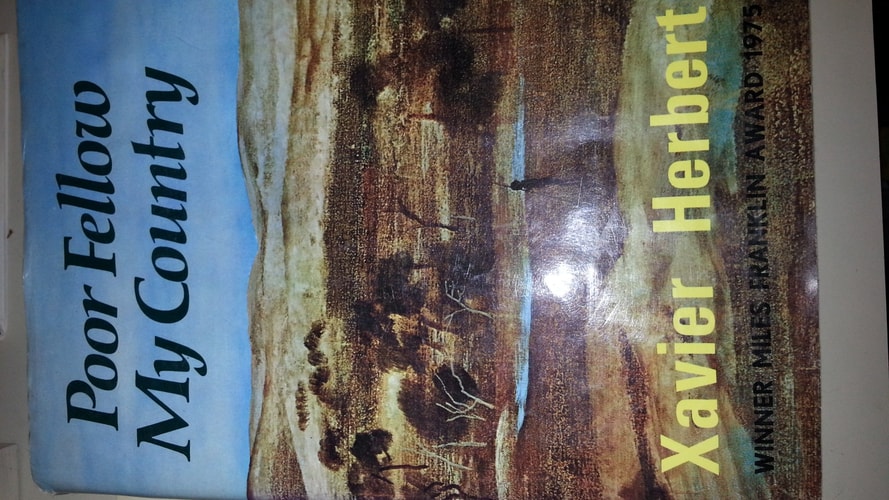
Poor Fellow My Country
0
0
As an Amazon Associate and affiliate partner, Menrva Books earns from qualifying purchases. Learn more
Author Description
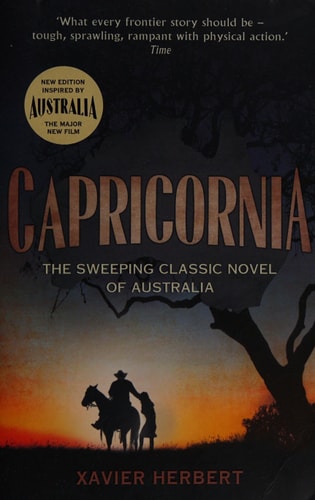
In Poor Fellow My Country, Xavier Herbert has returned to that region made peculiarly his own in Capricornia, Northern Australia. Ranging over a period of some six years, the story is set during the late 1930s and early 1940s; but it is not so much a tale of this period as Herbert's analysis (and indictment) of the steps by which we came to the Australia of today. Capturing the Spirit Of The Land, Herbert has paralleled an intimate personal narrative with a tale of approaching war. "Prindy, the young quarter-caste Aborigine identifies with Bob Wirridirridi the witch-doctor and the Rainbow Snake Cult. He grows from adolescence to manhood through a series of events, some of which are hilariously comic and others tragically violent, but he does not lose sight of his final goal: that of initiation into full manhood in the Cult of the Rainbow Snake. His natural grandfather Jeremy Delacy, The Scrub Bull, infuriates people with his attitudes, especially that of his apparent lack of interest in influencing Prindy. At times he is harsh and brutal, but he is also shown to love with rare compassion. Rifkah, the Jewish refugee from Nazi Germany, who eventually identifies with the Aborigines and becomes Prindy's tribal mother, is brought into conflict with Aelfreda Candlemas the reformer and writer who tries to make a superman of Jeremy and in her failure turns from scorching love to violent rejection. The book will long remain in the memory and is undoubtedly Herbert's supreme contribution to Australian literature.
Menrva's Summary
THE PULSE
Set against the backdrop of Northern Australia in the late 1930s and early 1940s, this sprawling narrative follows the life of a young Aboriginal boy named Prindy as he navigates the collision between traditional culture and the encroaching pressures of a world on the brink of war. Prindy, a quarter-caste youth, seeks to reconcile his identity through his connection to the Rainbow Snake Cult and his mentor, the witch-doctor Bob Wirridirridi. His grandfather, the defiant and controversial Jeremy Delacy, serves as a polarizing force, while the arrival of Jewish refugee Rifkah introduces a complex layer of cultural displacement and solidarity. The narrative functions as a sweeping critique of Australian history, utilizing a dense, multi-perspective framework to examine the erosion of indigenous sovereignty and the moral failures of the colonial state.
INSIDE THE PAGES
- Extensive exploration of the clash between Aboriginal spiritual traditions and Western colonial expansion
- Use of a sprawling, multi-generational scope to analyze the evolution of Australian national identity
- Incorporation of diverse character archetypes, including the political reformer, the displaced refugee, and the traditional elder
- Detailed depiction of the Northern Australian landscape as a central, active participant in the narrative
- Integration of historical events, specifically the lead-up to and early years of World War II
- Examination of the complexities of racial identity and the social hierarchies of the era
- Stylistic shifts between moments of dark, satirical humor and intense, visceral violence
- A non-linear, thematic focus on the concept of 'The Spirit of the Land' as a unifying, yet contested, force
THE COLLECTIVE ECHO
This work is widely recognized as a monumental, if polarizing, achievement in Australian letters, noted for its immense length and uncompromising political stance. Critics and readers often highlight the author's ambitious attempt to synthesize the personal development of his protagonist with a broader, scathing indictment of national history. The narrative's density and its unflinching portrayal of racial tensions and colonial brutality ensure that it remains a significant, albeit challenging, subject of literary study. While the prose is frequently praised for its vivid, sensory immersion in the Australian landscape, the book's sheer scale and didactic intensity continue to provoke debate regarding its structural cohesion and thematic reach.
Page Count:
1463
Publication Date:
1975-01-01
Publisher:
Fontana, Collins
ISBN-10:
0006160298
ISBN-13:
9780006160298
Historical Fiction
Literature & Fiction
Contemporary
Political fiction
Post-Colonial
Epic
Australian
Community Tags
Similar Books