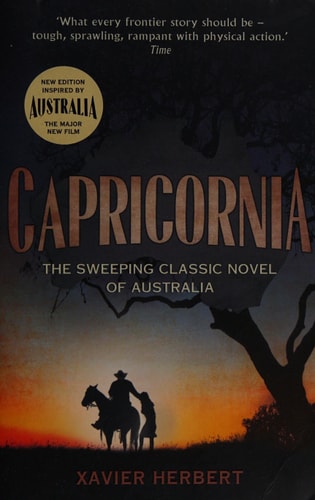
Capricornia
0
0
As an Amazon Associate and affiliate partner, Menrva Books earns from qualifying purchases. Learn more
Author Description
A saga of life in the Northern Territories and the clash of white and Aborigine cultures – one of Australia’s all-time best-selling novels and an inspiration for Baz Luhrmann’s lavish film ‘AUSTRALIA’.Capricornia has been described as one of Australia's 'great novels', a sharply observed chronicle about life in the Northern Territory of Australia and the inhumane treatment suffered by Aborigines at the hands of white men. The story is immense and rambling, laced with humour that is often as bitter and as harsh as the terrain in which it is set, and follows with irony the fortunes (and otherwise) of a range of Outback characters over a span of generations. Through their story is reflected the story of Australia, the clash of personalities and cultures that provide the substance on which today's society is founded. Above all, however, this is a novel of protest and of compassion - for the Aborigines and half-bloods of Australia's 'last frontier'.Sprawling, explosive, thronged with characters, plots and sub-plots, Capricornia is without doubt one of the best known and widely read Australian novels of the last 70 years. When it was first published it was acclaimed as 'a turning point', an 'outstanding work of social protest'. Its message is as penetrating today as it was in the 1930s when Herbert himself was official 'Protector of Aborigines' at Darwin.
Menrva's Summary
THE PULSE
The arrival of two brothers in the unforgiving Northern Territory of Australia ignites a multi-generational conflict defined by racial tension, systemic cruelty, and the struggle for identity. Norman Shillingsworth, a man of mixed heritage, navigates a landscape where the rigid social hierarchies and colonial prejudices of the white settlers constantly threaten his existence. The narrative employs a sprawling, non-linear structure to track the fortunes of various Outback characters, exposing the brutal realities of the frontier. Herbert utilizes a biting, ironic tone to contrast the harshness of the environment with the complex, often tragic, human interactions that define the region's history.
INSIDE THE PAGES
- Multi-generational narrative scope spanning several decades
- Satirical and bitter humor used to critique colonial authority
- Extensive cast of characters representing diverse social strata
- Vivid, sensory descriptions of the Australian Outback terrain
- Episodic plot structure with numerous sub-plots
- Direct social commentary on the treatment of Indigenous populations
- Use of regional dialect and colloquialisms to establish setting
- Themes of displacement, identity, and institutionalized racism
THE COLLECTIVE ECHO
Since its initial publication in the 1930s, this work has maintained a reputation as a significant pillar of Australian literature. Critics and readers alike have long recognized the novel for its unflinching portrayal of the racial injustices prevalent in the Northern Territory during the early twentieth century. The text is frequently cited for its immense scale and its role in shaping the national conversation regarding the treatment of Indigenous peoples. While the narrative's sprawling nature can present a challenge to some readers, its historical importance and stylistic intensity ensure its continued presence in academic and literary discussions.
Page Count:
592
Publication Date:
1938-01-01
Publisher:
Harper
ISBN-10:
0007311567
ISBN-13:
9780007311569
Historical Fiction
Post-Colonial
Northwest Territories
Fiction
Pioneer Life
Epic
Australian
Australian stories
Genre Fiction
Historical
Contemporary
Prejudices
Community Tags
Similar Books