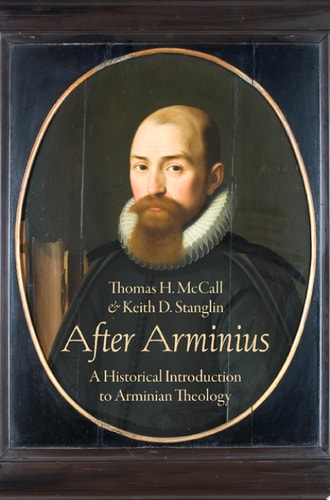
After Arminius: A Historical Introduction to Arminian Theology
0
0
As an Amazon Associate and affiliate partner, Menrva Books earns from qualifying purchases. Learn more
Author Description
Inspired by the ideas of the Dutch theologian Jacob Arminius, Arminianism was the subject of important theological controversies in the seventeenth and eighteenth centuries, and still today remains an important position within Protestant thought.What became known as Arminian theology was held by people across a wide swath of geographical and ecclesial positions. This theological movement was in part a reaction to the Reformed doctrine of predestination and was founded on the assertion that God's sovereignty and human free will are compatible. More broadly, it was an attempt to articulate a holistic view of God and salvation that is grounded in Scripture and Christian tradition as well as adequate to the challenges of life.First developed in European, British, and American contexts, the movement engaged with a wide range of intellectual challenges. While standing together in their common rejection of several key planks of Reformed theology, supporters of Arminianism took varying positions on other matters. Some were broadly committed to catholic and creedal theology, while others were more open to theological revision. Some were concerned primarily with practical matters, while others were engaged in system-building as they sought to articulate and defend an over-arching vision of God and the world. The story of Arminian development is complex, yet essential for a proper understanding of the history of Protestant theology. The historical development of Arminian theology, however, is not well known. In After Arminius, Thomas H. McCall and Keith D. Stanglin offer a thorough historical introduction to Arminian theology, providing an account that will be useful to scholars and students of ecclesiastical history and modern Christian thought.
Menrva's Summary
THE THESIS
This book investigates the historical development and theological diversity of the Arminian movement from its inception to its modern influence. Authors Keith D. Stanglin and Thomas H. McCall, both established scholars in historical theology, utilize primary source documents and historical analysis to argue that Arminianism is a multifaceted tradition rather than a monolithic set of doctrines. They present a framework that reconciles God's sovereignty with human free will while tracing how this theology adapted to various European, British, and American intellectual contexts.
THE SCOPE MAP
What You Will Find
- Historical analysis of the seventeenth and eighteenth-century theological controversies.
- Examination of the movement's reaction to Reformed predestination doctrines.
- Comparative study of diverse Arminian thinkers across different geographical and ecclesial settings.
Scope Limits
- The text does not provide a comprehensive systematic theology manual.
- It does not focus on contemporary denominational debates outside of historical context.
THE AUTHORITY PERSPECTIVE
Experts identify this work as a foundational historical survey for students and scholars of Protestant thought. Readers frequently note the academic rigor and clarity of the prose in navigating complex theological shifts.
Page Count:
294
Publication Date:
2020-01-01
Publisher:
Oxford University Press
ISBN-10:
0190874228
ISBN-13:
9780190874223
Religion
History
European History
Protestantism
Church History
Christian History
Modern History
Theology
Community Tags
Similar Books