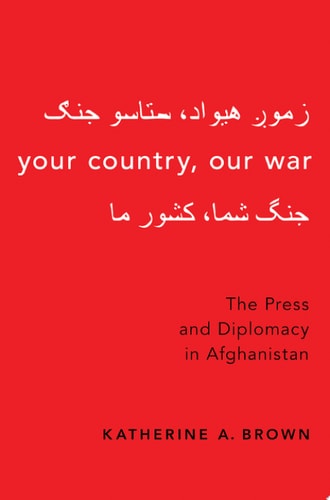
Your Country, Our War
0
0
As an Amazon Associate and affiliate partner, Menrva Books earns from qualifying purchases. Learn more
Author Description
Journalists Are Actors In International Relations, Mediating Communications Between Governments And Publics, But Also Between The Administrations Of Different Countries. American And Foreign Officials Simultaneously Consume The Work Of U.s. Journalists And Use It In Their Own Thinking About How To Conduct Their Work. As Such, Journalists Play An Unofficial Diplomatic Role. However, The U.s. News Media Largely Amplifies American Power. Instead Of Stimulating Greater Understanding, The U.s. Elite, Mainstream Press Can Often Widen Mistrust As They Promote An American Worldview And, With The Exception Of Some Outliers, Reduce The World Into A Tight Security Frame In Which The U.s. Is The Hegemon. This Has Been The Case In Afghanistan Since 2001, Particularly As Emerging Afghan Journalists Have Relied Significantly On U.s. And Other Western News Outlets To Report Events Within Their Government And Their Country. Based On Eight Years Of Interviews In Kabul, Washington, And New York, Your Country, Our War Demonstrates How News Has Intersected With International Politics During The War In Afghanistan And Shows The Global Power And Reach Of The U.s. News Media, Especially Within The Context Of The Post-9/11 Era. It Reviews The Trajectory Of The U.s. News Narrative About Afghanistan And America's Never-ending War, And The Rise Of Afghan Journalism, From 2001 To 2017. The Book Also Examines The Impact Of The American News Media Inside A War Theater. It Examines How U.s. Journalists Affected The U.s.-afghan Relationship And Chronicles Their Contribution To The Rapid Development Of A Community Of Afghan Journalists Who Grappled Daily With How To Define Themselves And Their Country During A Tumultuous And Uneven Transition From Fundamentalist To Democratic Rule. Providing Rich Detail About The U.s.-afghan Relationship, Especially Former President Of Afghanistan Hamid Karzai's Convictions About The Role Of The Western Press, We Begin To Understand How Journalists Are Not Merely Ob
Menrva's Summary
THE THESIS
This book investigates the role of U.S. journalists as unofficial diplomatic actors and their influence on international relations during the war in Afghanistan. Katherine A. Brown, drawing on eight years of field research in Kabul, Washington, and New York, argues that the American mainstream press often reinforces U.S. hegemony rather than fostering cross-cultural understanding. By analyzing the intersection of news narratives and foreign policy, the author demonstrates how media coverage shaped the U.S.-Afghan relationship and influenced the development of the Afghan journalistic community from 2001 to 2017.
THE SCOPE MAP
What You Will Find
- Analysis of the U.S. news narrative regarding the war in Afghanistan from 2001 to 2017.
- Examination of the professional development and challenges faced by Afghan journalists during the transition from fundamentalist to democratic rule.
- Insights into the perspectives of key political figures, including former Afghan President Hamid Karzai, regarding Western media influence.
Scope Limits
- The study focuses primarily on the interaction between U.S. media and the Afghan political landscape rather than a comprehensive military history of the conflict.
- The analysis is limited to the period ending in 2017 and does not cover subsequent developments in the region.
THE AUTHORITY PERSPECTIVE
Scholars and media critics identify this work as a significant contribution to the study of media-state relations in conflict zones. Readers frequently note the depth of the primary source interviews, which provide a nuanced look at how news organizations function as participants in international diplomacy.
Page Count:
272
Publication Date:
2019-01-01
Publisher:
Oxford University Press
ISBN-10:
0190879424
ISBN-13:
9780190879426
History
Journalism
Media Studies
International relations
Community Tags
Similar Books