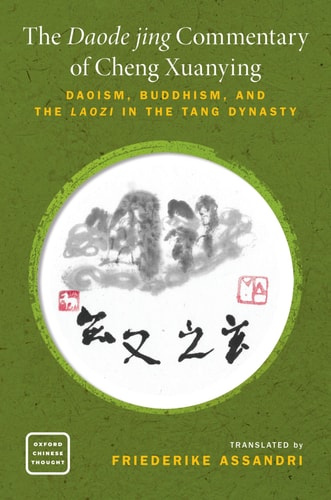
The Daode jing Commentary of Cheng Xuanying: Daoism, Buddhism, and the Laozi in the Tang Dynasty
0
0
As an Amazon Associate and affiliate partner, Menrva Books earns from qualifying purchases. Learn more
Author Description
This book presents for the first time in English a complete translation of the Expository Commentary to the Daode jing, written by the Daoist monk Cheng Xuanying in the 7th century CE. This commentary is a quintessential text of Tang dynasty Daoist philosophy and of Chongxuanxue or Twofold Mystery teachings. Cheng Xuanying proposes a reading of the ancient Daode jing that aligns the text with Daoist practices and beliefs and integrates Buddhist concepts and techniques into the exegesis of the Daode jing.Building on the philosophical tradition of Xuanxue authors like Wang Bi, Cheng read the Daode jing in light of Daoist religion. Cheng presents Laozi, the presumed author of the Daode jing, as a bodhisattva-like sage and savior, who wrote the Daode jing to compassionately guide human beings to salvation. Salvation is interpreted as a metaphysical form of immortality, reached by overcoming the dichotomy of being and non-being, and thus also life and death. Cheng's philosophical outlook ties together the ancient text of the Daode jing and contemporary developments in Daoist thought which occurred under the influence of an intense interaction with Buddhist ideas. The commentary is a vivid testimony of the integration of Buddhist thought into an exegesis of the ancient classic of the Daode jing, and thereby also into Chinese philosophy.Friederike Assandri frames this new translation with an extensive introduction, providing crucial context for a new reading of the Daode jing. It includes a biography of Cheng Xuanying, a discussion of the historical and political context of Daoism in early medieval China in the capital Chang'an, and a discussion of Cheng's philosophy in relation to the interaction of Daoism and Buddhism. This commentary is essential reading for students and scholars interested in the history of Chinese philosophy, Daoist thought, and the reception of Buddhism in China.
Menrva's Summary
THE THESIS
This book investigates how the 7th-century Daoist monk Cheng Xuanying synthesized Daoist philosophy with Buddhist concepts to reinterpret the Daode jing during the Tang Dynasty. Friederike Assandri, a scholar of Chinese thought, provides a comprehensive translation and analytical framework to examine how Cheng’s 'Twofold Mystery' (Chongxuanxue) school transformed the reception of the Laozi. By situating the text within the political and religious climate of the Tang capital, Chang'an, the author argues that Cheng’s work represents a critical evolution in Chinese intellectual history where Buddhist logic was systematically integrated into Daoist exegesis.
THE SCOPE MAP
What You Will Find
- A complete English translation of Cheng Xuanying's Expository Commentary to the Daode jing.
- A historical analysis of the Chongxuanxue school of philosophy.
- A biographical study of Cheng Xuanying and his role in Tang Dynasty religious politics.
- An examination of the synthesis between Daoist metaphysics and Buddhist soteriology.
Scope Limits
- The text focuses primarily on the 7th-century Tang period and does not provide a comprehensive history of later Daoist commentaries.
- The analysis is limited to the specific interpretive lens of Cheng Xuanying rather than a broad survey of all contemporary Daoist schools.
THE AUTHORITY PERSPECTIVE
Scholars identify this work as a significant contribution to the study of early medieval Chinese philosophy, particularly for its clear articulation of the intersection between Daoism and Buddhism. Readers frequently note the academic density of the prose, which serves as a rigorous resource for students and researchers of East Asian religious history.
Page Count:
440
Publication Date:
2021-11-09
Publisher:
Oxford University Press
ISBN-10:
0190876468
ISBN-13:
9780190876463
Religion
Philosophy
Daoism
Asian Studies
Buddhism
Chinese History
Community Tags
Similar Books