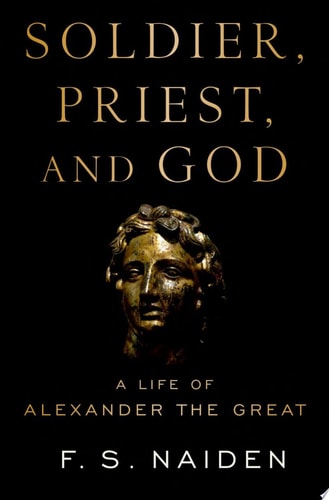
Soldier, Priest, and God
0
0
As an Amazon Associate and affiliate partner, Menrva Books earns from qualifying purchases. Learn more
Author Description
Whatever We May Think Of Alexander--whether Great Or Only Lucky, A Civilizer Or A Sociopath--most People Do Not Regard Him As A Religious Leader. And Yet Religion Permeated All Aspects Of His Career. When He Used Religion Astutely, He And His Army Prospered. In Egypt, He Performed The Ceremonies Needed To Be Pharaoh, And Thus Became A God As Well As A Priest. Babylon Surrendered To Him Partly Because He Agreed To Become A Sacred King. When Alexander Disregarded Religion, He And His Army Suffered. In Iran, For Instance, Where He Refused To Be Crowned And Even Destroyed A Shrine, Resistance Against Him Mounted. In India, He Killed Buddhists, Jains, And Hindus By The Hundreds Of Thousands Until His Officers, Men He Regarded As Religious Companians, Rebelled Against Him And Forced Him To Abandon His Campaign Of Conquest. Although He Never Fully Recovered From This Last Disappointment, He Continued To Perform His Priestly Duties In The Rest Of His Empire. As Far As We Know, The Last Time He Rose From His Bed Was To Perform A Sacrifice. Ancient Writers Knew Little About Near Eastern Religions, No Doubt Due To The Difficulty Of Travel To Babylon, India, And The Interior Of Egypt. Yet Details Of These Exotic Religions Can Be Found In Other Ancient Sources, Including Greek, And In The Last Thirty Years, Knowledge Of Alexander's Time In The Near East Has Increased. Egyptologists And Assyriologists Have Written The First Thorough Accounts Of Alexander's Religious Doings In Egypt And Mesopotamia. Recent Archaeological Work Has Also Allowed Scholars To Uncover New Aspects Of Macedonian Religious Policy. Soldier, Priest, And God, The First Religious Biography Of Alexander, Incorporates This Recent Scholarship To Provide A Vivid And Unique Portrait Of A Remarkable Leader.
Menrva's Summary
THE THESIS
This book investigates the central role of religious practice and belief in the career and decision-making processes of Alexander the Great. F. S. Naiden, a scholar of ancient history, utilizes recent archaeological findings and specialized research from Egyptology and Assyriology to re-examine Alexander's military campaigns through a theological lens. The author argues that Alexander's success or failure was frequently tied to his adherence to or disregard for the religious customs of the territories he conquered.
THE SCOPE MAP
What You Will Find
- Analysis of Alexander's religious rituals in Egypt, Mesopotamia, and India.
- Examination of the intersection between political legitimacy and priestly duties.
- Synthesis of recent archaeological data regarding Macedonian religious policy.
Scope Limits
- The text does not provide a comprehensive military history of Alexander's battles independent of their religious context.
- It does not attempt to psychoanalyze Alexander's personal faith, focusing instead on his public performance of religious duties.
THE AUTHORITY PERSPECTIVE
Scholars and historians recognize this work as a significant contribution to the study of Alexander by integrating previously disparate archaeological findings into a cohesive religious biography. Readers frequently note that the text provides a specialized perspective that challenges traditional secular interpretations of Alexander's leadership.
Page Count:
304
Publication Date:
2018-01-01
Publisher:
Oxford University Press
ISBN-10:
0190875356
ISBN-13:
9780190875350
History
Religion
Biography
Ancient History
Alexander the Great
Military History
Community Tags
Similar Books