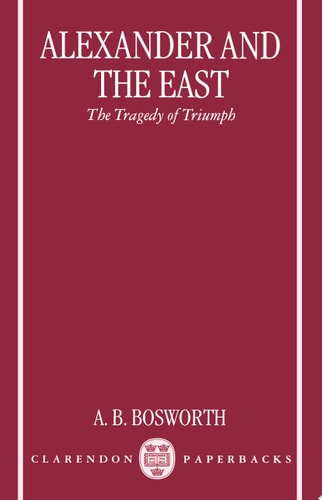
Alexander and the East: The Tragedy of Triumph
0
0
As an Amazon Associate and affiliate partner, Menrva Books earns from qualifying purchases. Learn more
Author Description
In This Study Brian Bosworth Looks At The Critical Period Between 329 And 325 Bc, When Alexander The Great Was Active In Central Asia And What Is Now Pakistan. He Documents Alexander's Relations With The Peoples He Conquered, And Addresses The Question Of What It Meant To Be On The Receiving End Of The Conquest, Drawing A Bleak Picture Of Massacre And Repression. At The Same Time Alexander's Views Of Empire Are Investigated, His Attitude To His Subjects, And The Development Of His Concepts Of Personal Divinity And Universal Monarchy. Analogies Are Thus Drawn With The Spanish Conquest Of Mexico, Which Has A Comparable Historiographical Tradition And Parallels Many Of Alexander's Dealings With His Subjects. Although Of Concern To The Specialist, This Book Is Equally Directed At The General Reader Interested In The History Of Alexander And The Morality Of Empire.
Menrva's Summary
THE THESIS
This study investigates the moral and political implications of Alexander the Great's conquest of Central Asia and Pakistan between 329 and 325 BC. A. B. Bosworth, a noted scholar of the Hellenistic period, utilizes primary historical sources to challenge traditional narratives of Alexander's reign. He argues that the expansionist policies of the Macedonian empire were characterized by systematic violence and repression, framing the campaign as a study in the ethics of imperial power.
THE SCOPE MAP
What You Will Find
- Analysis of the military campaigns in Central Asia and modern-day Pakistan
- Examination of Alexander's evolving concepts of personal divinity and universal monarchy
- Comparative historical analysis between Macedonian expansion and the Spanish conquest of Mexico
Scope Limits
- The text focuses specifically on the 329–325 BC period rather than the entirety of Alexander's life
- It does not provide a comprehensive military biography, focusing instead on the socio-political consequences of conquest
THE AUTHORITY PERSPECTIVE
Scholars and historians frequently cite this work for its critical examination of the human cost of Alexander's empire. Readers often note the academic rigor of the prose, which balances detailed historical documentation with broader philosophical questions regarding the morality of imperial rule.
Page Count:
240
Publication Date:
1998-12-17
Publisher:
Clarendon Press
ISBN-10:
0191589454
ISBN-13:
9780191589454
History
Biography
Ancient History
Political History
Military History
Community Tags
Similar Books