
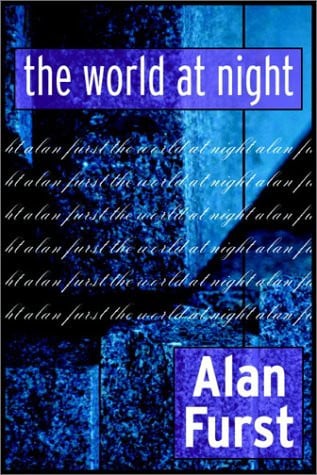
The World at Night
0
0
As an Amazon Associate and affiliate partner, Menrva Books earns from qualifying purchases. Learn more
Author Description
Reminiscent of the films noir of the 1940s, Alan Furst's World War II spy novels are classics of the form, widely praised as the most authentic and best-written espionage fiction today. In The World at Night Furst brings his extraordinary touch to a story of honor and lost love set against one of the twentieth century's great battlegrounds of intrigues - the German-occupied Paris of 1940. On the surface, film producer Jean Casson is a typical Parisian male: dark eyed, more attractive than handsome, well dressed, well bred. With his wife he has an "arrangement" - shared circle of friends, separate apartments - while he meets actors' agents and screenwriters in the best cafes' and bistros, spends evenings at dinner parties and nights in the beds of his women friends. Stunned at first by the German victory of 1940, Casson and others of his class are to learn, in the first months of occupation, that with enough money, compromise, and connections, one need not deny oneself the pleasures of Parisian life. But somewhere inside Casson is a stubborn romantic streak. It's what rekindles his passion for Citrine, the beautiful streetwise actress who was perhaps his only real love. And when he's offered the chance to take part in an operation of the British secret intelligence service, it's what gives him the courage to say yes. A simple mission, but it goes wrong, and Casson suddenly realizes he must gamble everything - his career, the woman he loves, his life itself.
Menrva's Summary
THE PULSE
When the German occupation of Paris shatters the comfortable life of film producer Jean Casson, he is drawn into a high-stakes game of espionage that forces him to abandon his detachment for the dangers of the resistance. Casson, a man accustomed to the superficial pleasures and social maneuvering of Parisian elite circles, finds his world upended by the sudden reality of war. As he navigates the moral compromises of occupied France, he is recruited by British intelligence for a mission that tests his loyalties and his romantic attachments. The narrative, presented with a focus on the atmospheric tension of the era, follows his transformation from a passive observer to an active participant in a clandestine struggle against the occupying forces.
INSIDE THE PAGES
- Atmospheric depiction of German-occupied Paris in 1940
- Focus on the moral ambiguity of the French elite during the occupation
- Integration of film industry subculture into the espionage plot
- Emphasis on the psychological shift of the protagonist from apathy to commitment
- Use of noir-inspired stylistic elements and pacing
- Exploration of the tension between personal desire and political duty
- Detailed portrayal of the clandestine operations of the British secret intelligence service
- Examination of the social and physical constraints imposed by wartime occupation
THE COLLECTIVE ECHO
This novel is widely regarded as a definitive example of atmospheric espionage fiction that captures the specific mood of the Second World War. Critics frequently highlight the author's ability to evoke the sensory details of 1940s Paris while maintaining a tight, suspenseful narrative structure. The characterization of Jean Casson is often cited as a nuanced study of a man caught between his own hedonistic tendencies and a burgeoning sense of moral responsibility. Readers generally appreciate the historical grounding of the plot, which avoids common genre tropes in favor of a more grounded, realistic depiction of life under occupation. The work remains a staple for those interested in the intersection of historical realism and the thriller genre.
Page Count:
320
Publication Date:
1996-01-01
Publisher:
HarperCollins Publishers Ltd
ISBN-10:
0006493114
ISBN-13:
9780006493112
Horror
History
Thriller
Historical Fiction
Noir
Genre Fiction
Action Adventure
World War
Espionage
Fiction
Literature & Fiction
Motion picture producers and directors
Community Tags
Other Editions(4)


Similar Books






Reader Comments
Share Your Thoughts
No comments yet. Be the first to share your thoughts!