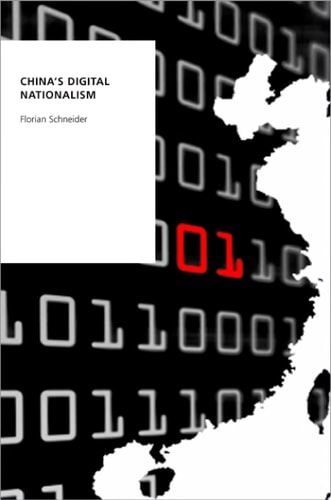
China's Digital Nationalism
0
0
As an Amazon Associate and affiliate partner, Menrva Books earns from qualifying purchases. Learn more
Author Description
Our Current Understanding Of Fake News And Cyber Warfare Aside, Many People Still Believe That The Internet Represents A Cosmopolitan Ideal Over Which The Flow Of Diverse Information Educates And Empowers Users. The Chinese Case Defies These Expectations. Nationalism, In China As Much As Elsewhere, Is Today Adopted, Filtered, Transformed, Enhanced, And Accelerated Through Digital Networks. And As We Have Increasingly Seen, Nationalism In Digital Spheres Interacts In Complicated Ways With Nationalism On The Ground. If We Are To Understand The Social And Political Complexities Of The 21st Century, We Need To Ask: What Happens To Nationalism When It Goes Digital? In China's Digital Nationalism, Florian Schneider Explores The Issue By Looking At Digital China First Hand, Exploring What Search Engines, Online Encyclopedias, Websites, Hyperlink Networks, And Social Media Can Tell Us About The Way That Different Actors Construct And Manage A Crucial Topic In Contemporary Chinese Politics: The Protracted Historical Relationship With Neighboring Japan. Using Two Cases, The Infamous Nanjing Massacre Of 1937 And The Recent Disputes Over Islands In The East China Sea, Schneider Shows How Various Stakeholders In China Construct Networks And Deploy Power To Shape Nationalism For Their Own Ends. These Dynamics Provide Crucial Lessons On How Nation-states Adapt To The Shifting Terrain Of The Digital Age, And They Highlight How Digital Nationalism Is Today An Emergent Property Of Complex Communication Networks-- Introduction -- Nationalism And Its Digital Modes -- Filtering Digital China -- Digital China's Hyperlink Networks -- The Mediated Massacre -- Selling Sovereignty On The Web -- The User-generated Nation -- The Cultural Governance Of Digital China -- Conclusion: The Future Of Nationalism In The Digital Age. Florian Schneider. Includes Bibliographical References And Index.
Menrva's Summary
THE THESIS
How does the integration of digital networks into the fabric of contemporary Chinese society transform and accelerate the expression of nationalism? Florian Schneider, a scholar of modern Chinese politics and digital communication, investigates this question by analyzing how state and non-state actors utilize online platforms to construct national identity. The book argues that digital nationalism is not merely a reflection of offline sentiment but an emergent property of complex communication networks that shape political discourse.
THE SCOPE MAP
What You Will Find
- Analysis of digital infrastructure including search engines, online encyclopedias, and social media platforms.
- Case studies focusing on the 1937 Nanjing Massacre and East China Sea territorial disputes.
- A framework for understanding the cultural governance of digital spaces in China.
Scope Limits
- The study does not provide an exhaustive history of Chinese nationalism outside of the digital context.
- The analysis is limited to specific case studies and does not cover every aspect of Chinese internet censorship or surveillance.
THE AUTHORITY PERSPECTIVE
Experts recognize this work as a significant contribution to the study of digital politics and the intersection of technology and statecraft. Readers frequently note the academic rigor and the detailed methodology Schneider employs to map complex hyperlink networks.
Page Count:
304
Publication Date:
2018-01-01
Publisher:
Oxford University Press,
ISBN-10:
0190876816
ISBN-13:
9780190876814
Digital Media
International relations
China Studies
Internet
Communication Studies
Political Aspects
Cyberspace
Nationalism
Community Tags
Other Editions(3)
Similar Books










Reader Comments
Share Your Thoughts
No comments yet. Be the first to share your thoughts!