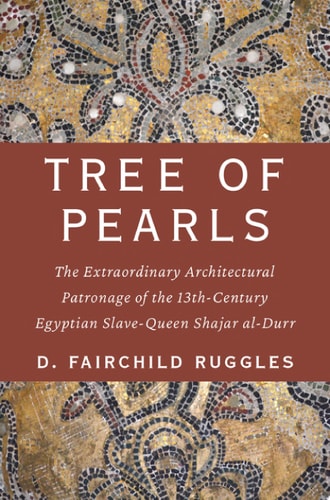
Tree of Pearls: The Extraordinary Architectural Patronage of the 13th-Century Egyptian Slave-Queen Shajar al-Durr
0
0
As an Amazon Associate and affiliate partner, Menrva Books earns from qualifying purchases. Learn more
Author Description
Shajar al-Durr--known as "Tree of Pearls"--began her remarkable career as a child slave, given as property to the Ayyubid Sultan Salih of Egypt. She became his favorite concubine, was manumitted, became the sultan's wife, served as governing regent, and ultimately rose to become the legitimately appointed sultan of Egypt in 1250 after her husband's death. Shajar al-Durr used her wealth and power to add a tomb to his urban madrasa; with this innovation, madrasas and many other charitably endowed architectural complexes became commemorative monuments, a practice that remains widespread today. A highly unusual case of a Muslim woman authorized to rule in her own name, her reign ended after only three months when she was forced to share her governance with an army general from the ranks of the Mamluks (elite slave soldiers) and for political expediency to marry him.Despite the fact that Shajar al-Durr's story ends tragically with her assassination and hasty burial, her deeds in her lifetime offer a stark alternative to the continued belief that women in the medieval period were unseen, anonymous, and inconsequential in a world that belonged to men. This biography--the first ever in English--will place the rise and fall of the sultan-queen in the wider context of the cultural and architectural development of Cairo, the city that still holds one of the largest and most important collections of Islamic monuments in the world. D. Fairchild Ruggles also situates the queen's extraordinary architectural patronage in relation to other women of her own time, such as Aleppo's Ayyubid regent. Tree of Pearls concludes with a lively discussion of what we can know about the material impact of women of both high and lesser social rank in this period, and why their impact matters in the writing of history.
Menrva's Summary
THE THESIS
This work investigates how the 13th-century Egyptian ruler Shajar al-Durr utilized architectural patronage to solidify her political legitimacy and influence the urban development of Cairo. D. Fairchild Ruggles, a scholar of Islamic landscape and architecture, examines the intersection of gender, power, and material culture in the Ayyubid and Mamluk periods. By analyzing the specific tomb addition to the Sultan Salih madrasa, the author argues that Shajar al-Durr established a precedent for commemorative architecture that redefined the role of charitable endowments in medieval Islamic society.
THE SCOPE MAP
What You Will Find
- Analysis of 13th-century Egyptian political structures and the transition from Ayyubid to Mamluk rule.
- Examination of the architectural evolution of Cairo's madrasas and funerary complexes.
- Comparative study of female patronage in the medieval Islamic world, including regional regents.
- Discussion of the historiographical challenges in documenting the lives of women in medieval societies.
Scope Limits
- The text does not provide a comprehensive military history of the Mamluk rise to power.
- It does not cover the entirety of Islamic architectural history beyond the specific context of 13th-century Cairo.
THE AUTHORITY PERSPECTIVE
Scholars and historians recognize this work as a significant contribution to the study of gender and agency in medieval Islamic history. Readers frequently note the author's ability to synthesize complex architectural evidence with political biography to provide a nuanced portrait of a historically marginalized figure.
Page Count:
200
Publication Date:
2020-01-01
Publisher:
Oxford University Press
ISBN-10:
0190873221
ISBN-13:
9780190873226
Biography
History
Architecture
Islamic History
Middle Eastern
Islamic Studies
Humanities
Womens Studies
History of Architecture
Africa - History
Woman Studies
European History
Medieval Art
Professional Career & Trade
Technology Design
Community Tags
Similar Books