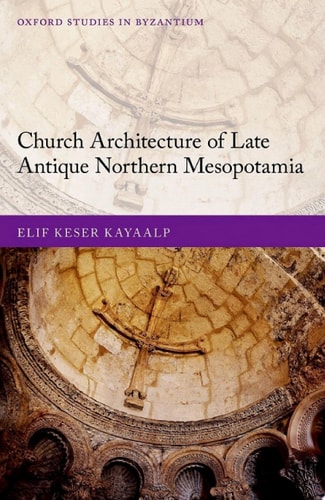
Church Architecture of Late Antique Northern Mesopotamia
0
0
As an Amazon Associate and affiliate partner, Menrva Books earns from qualifying purchases. Learn more
Author Description
Church Architecture of Late Antique Northern Mesopotamia examines the church architecture of Northern Mesopotamia between the fourth and eighth centuries. Keser Kayaalp focuses on settlements, plan types, artistic encounters, the remarkable continuity of the classical tradition in the architectural decoration, the heterogeneity of the building techniques, patrons, imperial motivations, dedications of churches, and stories that claim and make spaces. Employing archaeological and epigraphical material and hagiographical and historical sources, she presents a holistic picture of the church architecture of this frontier region, encompassing the cities of Nisibis (Nusaybin), Edessa (Şanliurfa), Amida (Diyarbakir), Anastasiopolis (Dara/Oğuz), Martyropolis (Silvan), Constantia (Viranşehir), and their surroundings, and the rural Tur Abdin region. The period covered spans the last centuries of Byzantine and the first century and a half of Arab rule, when the region was, on the one hand, a stage of war and riven by religious controversies, and a cultural interspace on the other. Keser Kayaalp discusses the different dynamics in this frontier region and the resulting built environment and church architecture in pursuit of providing a regional contribution to the study of the transformation that the Byzantine civilization underwent in the late antique period and understanding the continuities and changes after the Arab conquest.
Menrva's Summary
THE THESIS
This work investigates the development and transformation of church architecture in Northern Mesopotamia between the fourth and eighth centuries to understand the region's cultural and political shifts. Elif Keser Kayaalp, an expert in Byzantine and Near Eastern architectural history, synthesizes archaeological findings, epigraphical evidence, and historical texts to analyze how this frontier zone navigated the transition from Byzantine to Arab rule. The book argues that the built environment reflects a complex interplay of imperial patronage, religious controversy, and the persistent influence of classical traditions.
THE SCOPE MAP
What You Will Find
- Analysis of architectural plans, building techniques, and decorative motifs in Northern Mesopotamia.
- Examination of major urban centers including Nisibis, Edessa, Amida, and the rural Tur Abdin region.
- Integration of hagiographical and historical sources alongside physical archaeological data.
Scope Limits
- The study is geographically restricted to Northern Mesopotamia and does not provide a comprehensive survey of the entire Byzantine Empire.
- The analysis focuses primarily on church architecture and does not cover secular or domestic building traditions in equal depth.
THE AUTHORITY PERSPECTIVE
Scholars recognize this text as a rigorous contribution to the study of Late Antique frontier regions and the evolution of Byzantine civilization. Readers frequently note the academic density of the prose and the extensive use of primary source material to support the author's regional analysis.
Page Count:
297
Publication Date:
2021-01-01
Publisher:
OUP Oxford
ISBN-10:
0192634097
ISBN-13:
9780192634092
History
Architecture
Technology Design
Archaeology
Byzantine History
Middle Eastern
Religious History
Professional Career & Trade