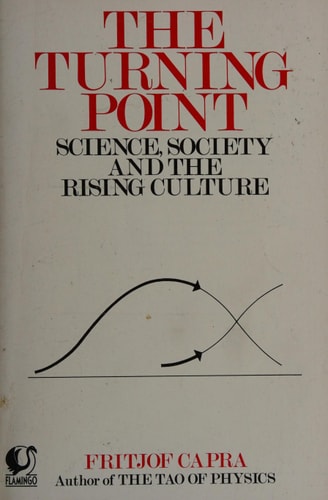
The Turning Point: Science, Society, and the Rising Culture
0
0
As an Amazon Associate and affiliate partner, Menrva Books earns from qualifying purchases. Learn more
Author Description
While physicists were busy revolutionizing our outlook on the fundamentals of the universe, the mechanistic paradigm of the past had already taken hold on the methods of every other field. Our biologists had taken a mechanistic view of life. From a biology textbook quoted by Capra, "One of the acid tests of understanding an object is the ability to put it together from its component parts. " (Capra p. 102) An approach that ironically is quite opposed to the study of life. We've now realized that the mapping of the human genome has yielded many beautiful computer models but little else. The biomedical model which concentrates on the mechanisms of smaller and smaller fragments of the body has yielded an approach that views disease as, "the malfunctioning of biological organisms which are studied from the point of view of cellular and molecular biology; the doctor's role is to intervene, either physically or chemically, to correct the malfunctioning of a specific mechanism." (p.123) The ingestion of many chemicals and execution of complicated surgeries has resulted in ever rising health care costs, and while saving many lives has primarily served as an excuse for lifestyles that run counter to human nature. "We prefer to talk about our children's hyperactivity or learning disability rather than examine the inadequacy of our schools; we prefer to be told that we suffer from hypertension rather than change our over-competitive business world; we accept ever increasing rates of cancer rather than investigate how the chemical industry poisons our food to increase its profits." (p.163)
Menrva's Summary
THE THESIS
This work investigates the fundamental crisis of modern society by arguing that our reliance on a mechanistic, reductionist paradigm is incompatible with the interconnected nature of biological and social systems. Fritjof Capra, a theoretical physicist, utilizes his expertise in systems theory to critique the prevailing scientific worldview that treats complex organisms and social structures as mere collections of parts. He posits that this fragmented approach has led to systemic failures in medicine, economics, and environmental management, necessitating a shift toward a holistic, ecological perspective to ensure future stability.
THE SCOPE MAP
What You Will Find
- A critique of the Cartesian-Newtonian mechanistic model applied to biology and medicine.
- An analysis of the systemic failures in modern healthcare and industrial food production.
- A synthesis of systems theory and ecological principles as an alternative to reductionism.
- Case studies illustrating the societal consequences of prioritizing short-term technological intervention over long-term ecological health.
THE AUTHORITY PERSPECTIVE
The text serves as a dense, interdisciplinary critique that challenges the foundational assumptions of 20th-century scientific and social institutions. Its arguments provide a framework for understanding the limitations of reductionist thought, appealing to readers interested in the intersection of physics, philosophy, and social reform.
Page Count:
540
Publication Date:
1982-01-01
Publisher:
Flamingo
ISBN-10:
0006540171
ISBN-13:
9780006540175
Philosophy
Science
Science
Medicine
Sociology
Systems Theory
Community Tags
Similar Books