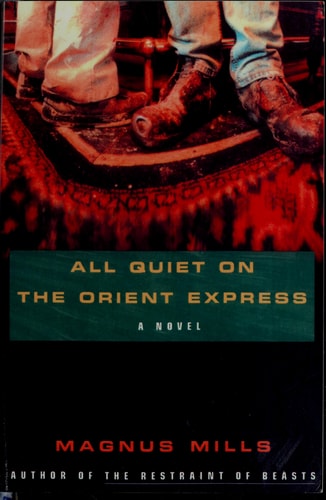
All Quiet on the Orient Express
0
0
As an Amazon Associate and affiliate partner, Menrva Books earns from qualifying purchases. Learn more
Author Description
Innocence, experience and comedy in Cumbria He's a bit of a handyman. Or, at least, so Mr Parker seems to think. No matter, he'll soon be on that train east to India from these wet lakeland fells. Just as soon as he's finished that little job Mr Parker asked him to do. It wasn't much of a holiday anyway. As the tourists trickled away from the campsite, so did the sunshine, and the hot water, and the provisions at the local shop, and even the good beer. Still, there seemed to be plenty of work to take his mind off these minor disappintments -- as much as he cared to do, in fact, even homework. And payment could be discussed later. Meanwhile, he was really beginning to fit in, to become one of the local fixtures, down the pub, on the farm, on the lake. Maybe that trip east could wait? In this cautionary tale of labour and capital, of innocence and experience, Magnus Mills takes us back to the kind of terrain he patrolled so notably in The Restraint of Beasts -- rural circuits where neither cash nor unemployment are much prized -- and makes it conclusively his own turf.
Menrva's Summary
THE PULSE
A traveler’s plans to depart for India are indefinitely postponed when he becomes ensnared in a series of odd jobs for a local resident. The protagonist, Mr. Parker, finds himself trapped in a cycle of labor and social obligation within a remote Cumbrian campsite as the seasons turn and his original ambitions fade. He must navigate the peculiar expectations of the local community, where the boundaries between employment, friendship, and exploitation become increasingly blurred. The narrative, delivered in a deadpan, observational tone, tracks his gradual transformation from a transient visitor into a permanent, albeit reluctant, fixture of the rural landscape.
INSIDE THE PAGES
- Deadpan, minimalist prose style characteristic of the author
- Exploration of the power dynamics between labor and capital
- Setting defined by the isolation and slow decay of a rural campsite
- Themes of social entrapment and the loss of individual agency
- Episodic structure that mirrors the repetitive nature of the protagonist's tasks
- Satirical commentary on the nature of work and professional obligation
- Focus on the mundane details of daily life as a source of tension
- Gradual shift in perspective from outsider to local fixture
THE COLLECTIVE ECHO
This work is frequently noted for its dry, understated humor and its ability to turn mundane labor into a source of existential dread. Readers often highlight the author's skill in creating a sense of claustrophobia within a seemingly open rural setting. The narrative is widely regarded as a sharp critique of the ways in which individuals can be subtly coerced into roles they never intended to occupy. The book’s pacing is often described as deliberate, mirroring the protagonist's own inability to escape his circumstances.
Page Count:
224
Publication Date:
2000-01-01
Publisher:
Flamingo
ISBN-10:
0006551858
ISBN-13:
9780006551850
Humor
Contemporary
Fiction
Satire
British literature
Modern fiction
Literary
Literature & Fiction
Fiction
Contemporary
Community Tags
Other Editions(8)


Similar Books










Reader Comments
Share Your Thoughts
No comments yet. Be the first to share your thoughts!