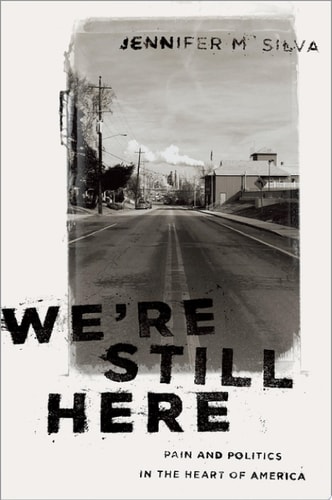
We're Still Here
0
0
As an Amazon Associate and affiliate partner, Menrva Books earns from qualifying purchases. Learn more
Author Description
The Economy Has Been Brutal To American Workers For Several Decades. The Chance To Give One's Children A Better Life Than One's Own -- The Promise At The Heart Of The American Dream -- Is Withering Away. While Onlookers Assume Those Suffering In Marginalized Working-class Communities Will Instinctively Rise Up, The 2016 Election Threw Into Sharp Relief How Little We Know About How The Working-class Translate Their Grievances Into Politics. In We're Still Here, Jennifer M. Silva Tells A Deep, Multi-generational Story Of Pain, Place, And Politics That Will Endure Long After The Trump Administration. Drawing On Over 100 Interviews With Black, White, And Latino Working-class Residents Of A Declining Coal Town In Pennsylvania, Silva Reveals How The Decline Of The American Dream Is Lived And Felt. The Routines And Rhythms Of Traditional Working-class Life Such As Manual Labor, Unions, Marriage, Church, And Social Clubs Have Diminished. In Their Place, She Argues, Individualized Strategies For Coping With Pain, And Finding Personal Redemption, Have Themselves Become Sources Of Political Stimulus And Reaction Among The Working Class. Understanding How Generations Of Democratic Voters Come To Reject The Social Safety Net And Often Politics Altogether Requires Moving Beyond Simple Partisanship Into A Maze Of Addiction, Joblessness, Family Disruption, Violence, And Trauma. Instead, Silva Argues That We Need To Uncover The Relationships, Loyalties, Longings, And Moral Visions That Underlie And Generate The Civic And Political Disengagement Of Working-class People. We're Still Here Provides Powerful, On The Ground Evidence Of The Remaking Of Working-class Identity And Politics That Will Spark New Tensions But Also Open Up The Possibility For Shifting Alliances And New Possibilities.
Menrva's Summary
THE THESIS
This book investigates how the erosion of the American Dream and the decline of traditional working-class institutions have fundamentally altered the political engagement and social identity of American workers. Jennifer M. Silva, a sociologist, utilizes extensive qualitative research to examine the intersection of personal trauma and political alienation. She argues that as traditional community structures like unions and churches have dissolved, individuals have turned toward private strategies for coping with economic instability, which in turn reshapes their broader political outlook and civic participation.
THE SCOPE MAP
What You Will Find
- Qualitative analysis of over 100 in-depth interviews with Black, White, and Latino residents.
- A study of a deindustrialized coal town in Pennsylvania as a microcosm of national trends.
- An examination of how addiction, family disruption, and joblessness influence political disengagement.
Scope Limits
- The study focuses on a specific geographic region and may not account for all regional variations in working-class experiences across the United States.
- The research prioritizes individual psychological and social narratives over macro-economic policy analysis.
THE AUTHORITY PERSPECTIVE
Experts in sociology and political science frequently cite this work for its nuanced, on-the-ground perspective regarding the complexities of the modern American working class. Readers often note the academic rigor of the prose while appreciating the human-centered approach to understanding political shifts.
Page Count:
304
Publication Date:
2019-01-01
Publisher:
Oxford University Press
ISBN-10:
0190888059
ISBN-13:
9780190888053
Economics
Sociology
Working class
American Studies
Social Commentary
Community Tags
Similar Books