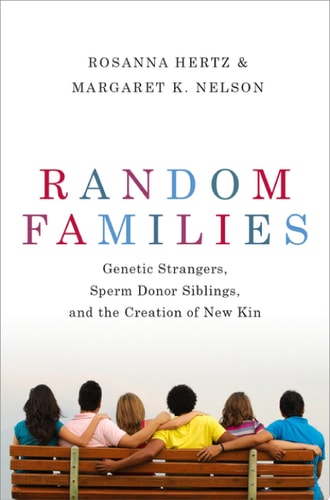
Random Families
0
0
As an Amazon Associate and affiliate partner, Menrva Books earns from qualifying purchases. Learn more
Author Description
The Ready Availability Of Donated Sperm And Eggs Has Made Possible An Entirely New Form Of Family. Children Of The Same Donor And Their Families, With The Help Of The Internet, Can Now Locate Each Other And Make Contact. Sometimes This Network Of Families Form Meaningful Connections That Blossom Into Longstanding Groups, And Close Friendships. This Book Is About Unprecedented Families That Have Grown Up At The Intersection Of New Reproductive Technologies, Social Media And The Human Desire For Belonging. Random Families Asks: Do Shared Genes Make You A Family? What Do Couples Do When They Discover That Their Children Shares Half Their Dna With A Dozen Or More Other Offspring From The Same Sperm Donor? What Do Kids Find In Common With Their Donor Siblings? What Becomes Of These Chance Networks Once Parents And Donor Siblings Find One Another? Based On Over 350 Interviews With Children (ages 10-28) And Their Parents From All Over The U.s., Random Families Chronicles The Chain Of Choices That Couples And Single Mothers Make From What Donor To Use To How To Participate (or Not) In Donor Sibling Networks. Children Reveal Their Understanding Of A Donor, The Donor's Spot On The Family Tree And The Meaning Of Their Donor Siblings. Through Rich First-person Accounts Of Network Membership, The Book Illustrates How These Extraordinary Relationships -- Woven From Bits Of Online Information And Shared Genetic Ties -- Are Transformed Into New Possibilities For Kinship. Random Families Offers Down-to-earth Stories From Real Families To Highlight Just How Truly Distinctive These Contemporary New Forms Of Family Are.
Menrva's Summary
THE THESIS
This book investigates how the intersection of reproductive technology and social media facilitates the formation of new, non-traditional kinship networks among donor-conceived children and their families. Authors Margaret K. Nelson and Rosanna Hertz, both established sociologists, utilize a qualitative research framework to analyze the experiences of families navigating donor-conceived relationships. By examining the choices made by parents and the perspectives of children, the authors argue that these networks redefine traditional concepts of family and belonging in the modern era.
THE SCOPE MAP
What You Will Find
- Analysis of over 350 interviews with donor-conceived children and their parents across the United States.
- Examination of the decision-making processes regarding donor selection and participation in online sibling networks.
- Exploration of how shared genetic ties and digital information are synthesized into personal definitions of kinship.
Scope Limits
- The study focuses primarily on the United States and does not provide a comprehensive global analysis of international reproductive laws.
- The research does not address the medical or biological aspects of fertility treatments, focusing instead on the social and relational outcomes.
THE AUTHORITY PERSPECTIVE
Experts in sociology and family studies recognize this work as a significant contribution to the understanding of contemporary kinship structures. Readers frequently note the accessibility of the prose, which balances academic rigor with the personal narratives of the families involved.
Page Count:
320
Publication Date:
2018-01-01
Publisher:
Oxford University Press
ISBN-10:
0190888288
ISBN-13:
9780190888282
Sociology
Parenting
Anthropology
Reproductive Technology
Family Studies
Social Science
Community Tags
Similar Books