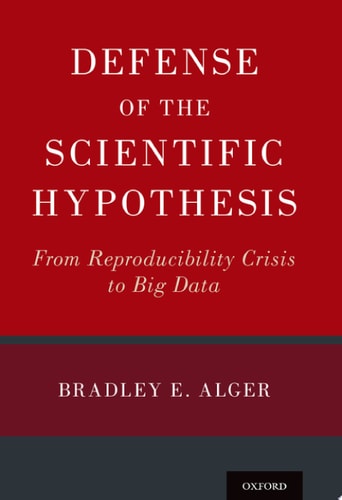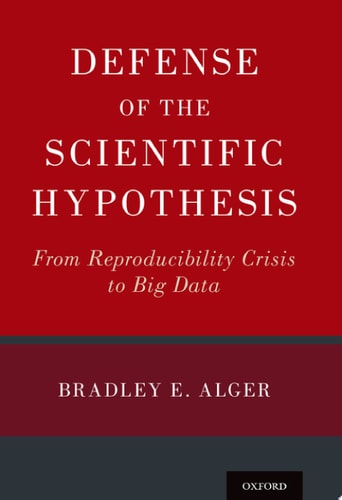
Defense of the Scientific Hypothesis
0
0
As an Amazon Associate and affiliate partner, Menrva Books earns from qualifying purchases. Learn more
Author Description
Defense Of Scientific Hypothesis: From Reproducibility Crisis To Big Data Sets Out To Explain And Defend The Scientific Hypothesis. Alger's Mission Is To Counteract The Misinformation And Misunderstanding About The Hypothesis That Even Seasoned Scientists Have Concerning Its Nature And Place In Modern Science. Most Biological Scientists Receive Little Or No Formal Training In Scientific Thinking. Further, The Hypothesis Is Under Attack By Critics Who Claim That It Is Irrelevant To Science. In Order To Appreciate And Evaluate Scientific Controversies Like Global Climate Change, Vaccine Safety, Etc., The Public First Needs To Understand The Hypothesis. Defense Of Scientific Hypothesis Begins By Describing And Analyzing The Scientific Hypothesis In Depth And Examining Its Relationships To Various Kinds Of Science. Alger Then Guides Readers Through A Review Of The Hypothesis In The Context Of The Reproducibility Crisis And Presents Survey Data On How Scientists Perceive And Employ Hypotheses. He Assesses Cognitive Factors That Influence Our Ability To Use The Hypothesis And Makes Practical And Policy Recommendations For Teaching And Learning About It. Finally, Alger Considers Two Possible Futures Of The Hypothesis In Science As The Big Data Revolution Looms: In One Scenario, The Hypothesis Is Displaced By The Big Data Mindset That Forgoes Understanding In Favor Of Correlation And Prediction. In The Other, Robotic Science Incorporates The Hypotheses Into Mechanized Laboratories Guided By Artificial Intelligence. But In His Illuminating Epilogue, Alger Envisions A Third Way, The Centaur Scientist, A Symbiotic Relationship Between Human Scientists And Computers.
Menrva's Summary
THE THESIS
This book investigates the declining understanding and utility of the scientific hypothesis in modern research, arguing for its continued necessity despite the rise of big data. Bradley E. Alger, a seasoned scientist, addresses the lack of formal training in scientific thinking within biological sciences. He posits that the hypothesis remains a critical tool for navigating complex controversies and proposes a symbiotic future where human reasoning and computational power integrate to advance scientific discovery.
THE SCOPE MAP
What You Will Find
- Analysis of the scientific hypothesis and its relationship to various scientific disciplines
- Survey data regarding how contemporary scientists perceive and utilize hypotheses
- Evaluation of cognitive biases that impact scientific reasoning
- Practical recommendations for pedagogical reform in scientific education
- Exploration of the 'Centaur Scientist' model for human-AI collaboration
Scope Limits
- The text does not provide a comprehensive history of all scientific methodologies
- It does not offer a technical manual for specific big data programming languages
THE AUTHORITY PERSPECTIVE
Experts recognize this work as a significant contribution to the philosophy of science, particularly regarding the intersection of traditional methodology and modern data analytics. Readers frequently note the academic density of the prose, which serves as a rigorous examination of scientific practice for both researchers and informed laypeople.
Page Count:
256
Publication Date:
2019-01-01
Publisher:
Oxford University Press
ISBN-10:
0190881496
ISBN-13:
9780190881498
Science
Philosophy of
Scientific Method
Data Science
Epistemology
Community Tags
Similar Books