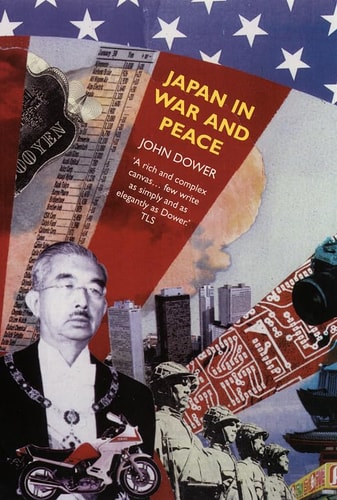
Japan in War and Peace
0
0
As an Amazon Associate and affiliate partner, Menrva Books earns from qualifying purchases. Learn more
Author Description
More than any historian of his generation, John Dower has changed the way we view our relations with Japan. In his prize-winning War Without Mercy, Dower showed the depth of the racial antagonism that gave the war in the Pacific its particularly violent and brutal tone. In Japan in War and Peace, he examines unexplored continuities and connections in Japanese politics, economics, and society at large. Drawing on decades of experience and research, Dower highlights resemblances between wartime, postwar, and contemporary Japan. He argues persuasively that the origins of many of the institutions responsible for Japan's dominant position in today's global economy derive from the rapid military industrialization of the 1930s and not from the post-Occupation period, as many have assumed. The brilliant lead essay, "The Useful War," sets the tone for the volume by incisively showing how much of Japan's postwar political and economic structure was prefigured in the wartime organization of that country. Japan in War and Peace goes beyond the popular images of Japanese culture - whether the idea of the "fanatical nation at war" or the mystified vision of a postwar "economic miracle" - to examine the tensions within Japanese society that have shaped its outlook toward the rest of Asia and the West. These pathbreaking essays also deal with such subjects as Japanese wartime cinema, Japan's own hapless attempts to build an atomic bomb, the social upheaval revealed in the secret wartime records of the Thought Police, and the dynamics of the postwar U.S. Occupation of Japan. Dower's final essays frankly discuss the stereotypes that Japan and the United States used to demonize each other during the war, which to this day play a role in their relations as allies. This new book from one of the foremost American observers of contemporary Japan is essential reading for all people attempting to understand a nation that has emerged as one of the superpowers in a fast-changing world.
Menrva's Summary
THE THESIS
This collection of essays investigates the structural and institutional continuities between Japan's wartime mobilization and its subsequent postwar economic dominance. John W. Dower, a preeminent historian of modern Japan, utilizes decades of archival research and analysis to challenge the conventional narrative that Japan's economic success emerged solely from post-Occupation reforms. He argues that the foundations of the modern Japanese state were firmly established during the rapid military industrialization of the 1930s.
THE SCOPE MAP
What You Will Find
- Analysis of the institutional links between 1930s military industrialization and postwar economic structures.
- Examination of cultural artifacts including wartime cinema and secret records of the Thought Police.
- Historical investigation into Japan's wartime atomic bomb research program.
- Critical assessment of the mutual demonization and stereotypes between the United States and Japan.
THE AUTHORITY PERSPECTIVE
This volume is regarded as a rigorous and insightful contribution to the field of Japanese studies, praised for its ability to dismantle simplistic myths about both the wartime and postwar eras. The work provides a dense, scholarly examination that is well-suited for students and specialists seeking a nuanced understanding of the historical forces shaping contemporary Japan.
Page Count:
352
Publication Date:
1996-01-01
Publisher:
Fontana
ISBN-10:
0006863469
ISBN-13:
9780006863465
History
Economics
Japan
International relations
Military History
Community Tags
Similar Books