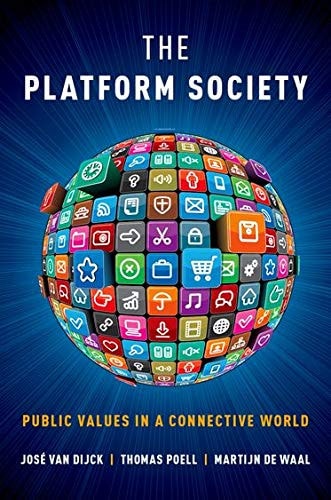
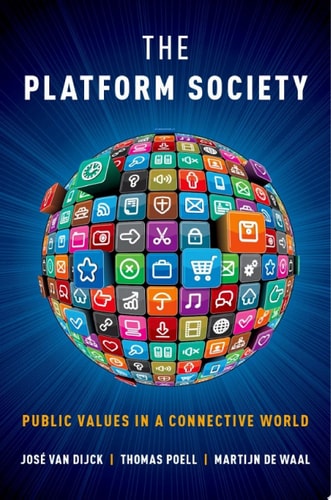
The Platform Society: Public Values in a Connective World
0
0
As an Amazon Associate and affiliate partner, Menrva Books earns from qualifying purchases. Learn more
Author Description
Individuals all over the world can use Airbnb to rent an apartment in a foreign city, check Coursera to find a course on statistics, join PatientsLikeMe to exchange information about one's disease, hail a cab using Uber, or read the news through Facebook's Instant Articles. The promise of connective platforms is that they offer personalized services and contribute to innovation and economic growth, while bypassing cumbersome institutional or industrial overhead.In The Platform Society, Van Dijck, Poell and De Waal offer a comprehensive analysis of a connective world where platforms have penetrated the heart of societies-disrupting markets and labor relations, circumventing institutions, transforming social and civic practices and affecting democratic processes. This book questions what role online platforms play in the organization of Western societies. First, how do platform mechanisms work and to what effect are they deployed? Second, how can platforms incorporate public values and benefit the public good?The Platform Society analyzes intense struggles between competing ideological systems and contesting societal actors-market, government and civil society-raising the issue of who is or should be responsible for anchoring public values and the common good in a platform society. Public values include of course privacy, accuracy, safety, and security, but they also pertain to broader societal effects, such as fairness, accessibility, democratic control, and accountability. Such values are the very stakes in the struggle over the platformization of societies around the globe.The Platform Society highlights how this struggle plays out in four private and public sectors: news, urban transport, health, and education. Each struggle highlights local dimensions, for instance fights over regulation between individual platforms and city governments, but also addresses the level of the platform ecosystem as well as the geopolitical level where power clashes between global mar
Menrva's Summary
THE THESIS
This book investigates how online platforms disrupt traditional societal structures and explores how public values can be maintained within a connective, platform-driven world. The authors, José van Dijck, Martijn de Waal, and Thomas Poell, utilize a multidisciplinary approach combining media studies, sociology, and political science to analyze the tension between market-driven platform mechanisms and the preservation of the public good. They present a framework for understanding the power dynamics between global corporations, government entities, and civil society as they negotiate the governance of digital infrastructure.
THE SCOPE MAP
What You Will Find
- Analysis of platform mechanisms and their impact on social and civic practices
- Examination of the struggle between market, government, and civil society actors
- Case studies focusing on news, urban transport, health, and education sectors
- A framework for defining and protecting public values like privacy, fairness, and accountability
Scope Limits
- The analysis is primarily focused on Western societies and their specific institutional contexts
- The text does not provide a technical manual for platform development or software engineering
THE AUTHORITY PERSPECTIVE
Scholars and policy analysts frequently cite this work as a foundational text for understanding the intersection of digital platforms and democratic governance. Readers often note the academic rigor and the clarity with which the authors map complex power dynamics in the digital age.
Page Count:
238
Publication Date:
2018-11-02
Publisher:
Oxford University Press
ISBN-10:
0190889764
ISBN-13:
9780190889760
Technology
Social Media
Internet
Digital Media
Sociology
Public Policy
Community Tags
Other Editions(2)
Similar Books











Reader Comments
Share Your Thoughts
No comments yet. Be the first to share your thoughts!