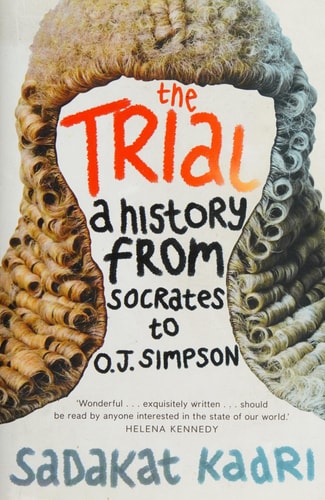
The Trial: A History from Socrates to O.J. Simpson
0
0
As an Amazon Associate and affiliate partner, Menrva Books earns from qualifying purchases. Learn more
Author Description
In an extraordinary history of the criminal trial, Sadakat Kadri traces the development of criminal justice from the marbled courtrooms of Athens, past the torture chambers of the Inquisition to the judicial theatres of seventeenth-century Salem, from 1930s Moscow and post-war Nuemberg to the virtual courtooms of modern Hollywood. For as long as accuser and accused have faced each other in public, criminal trials have been establishing more than who did what to whom, and in this fascinating book Sadakat Kadri, a practicing barrister, surveys over four thousand years of courtroom drama. Encyclopaedic and entertaining, comprehensive and colourful, The Trial addresses many profound themes with verve and wit. Who has the right to judge, and why? What did past civilisations hope to achieve through scapegoats and sacrifices - and to what extent are defendants still made to bear the sins of society at large? In the book, Kadri journeys from the silence of ancient Egypt's Hall of the Dead to the clamour of twenty-first century Hollywood to show how emotions and fears have inspired western notions of justice - and the extent to which they still riddle its trials today. He explains, for example, how juries emerged in medieval England as a variation on trials by fire and water, a divinely supervised validation of vengeance, and how delusions precisely identical to those that sent witches to the stake revived as Satanic child abuse accusations during the 1980s. Although Justice's sword has always been double-edged - as ready to destroy a community's enemies as to defend its dreams of due process - the judicial contest also operates to enshrine some of the western world's most cherished values. The show trials of Stalin's Soviet Union were shams, but Guantanamo Bay and Abu Ghraib act as a reminder that no-trials are equally unjust, and at a time when our familiar constitutional landscape seems to be melting away, an appreciation of the criminal courtroom's history is more necessary than ever.
Menrva's Summary
THE THESIS
This work investigates the evolution of the criminal trial as a social and legal institution, questioning how ancient rituals of judgment have shaped modern concepts of justice. Author Sadakat Kadri, a practicing barrister, utilizes a vast historical framework to examine how societies have utilized the courtroom to manage collective fears and moral anxieties. By analyzing legal practices from ancient Athens to contemporary Hollywood, the text argues that the trial serves as both a mechanism for due process and a theater for societal scapegoating. The analysis bridges the gap between historical judicial practices and modern constitutional challenges.
THE SCOPE MAP
What You Will Find
- Historical analysis of judicial systems from ancient Egypt and Athens to the Inquisition and the Salem witch trials.
- Examination of the evolution of the jury system in medieval England as a successor to trials by ordeal.
- Comparative study of show trials in Stalinist Russia and modern detention centers like Guantanamo Bay.
- Exploration of the psychological and cultural drivers behind the human need for public judgment and retribution.
THE AUTHORITY PERSPECTIVE
The subject matter points to a comprehensive, scholarly yet accessible survey of legal history that balances academic rigor with a narrative focus on the drama of the courtroom. The framing suggests a text intended for readers interested in the intersection of law, history, and the evolution of Western societal values.
Page Count:
336
Publication Date:
2005-09-01
Publisher:
Harper Collins Publishers
ISBN-10:
0007111215
ISBN-13:
9780007111213
True Crime
History
Law
Legal History
Sociology
Criminology
World
Community Tags
Similar Books