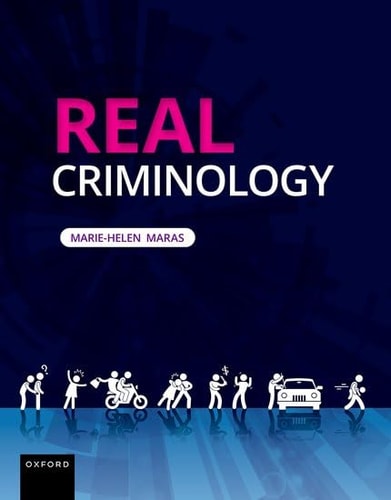
Real Criminology
0
0
As an Amazon Associate and affiliate partner, Menrva Books earns from qualifying purchases. Learn more
Author Description
This Textbook Draws On Literature From Criminology, Psychology, Sociology, History, Geography, Philosophy, Political Science, Economics, Criminal Justice, Law, Biology, Medicine, And Public Policy And Administration To Analyze And Explain Crime. Using This Multidisciplinary Lens, The Book Introduces Students To Criminology; Types Of Crime; Impacts Of Crime; Theories Explaining Crime, Criminality, And Victimization; Studies On Crime, Offenders, Victims, And Witnesses Of Crime; Reactions To Crime; And The Nature And Extent Of Crime In The United States And Abroad. Popular Films, Tv Shows, Fiction Books, And Games Are Used Throughout The Text To Draw Readers' Attention To How Crime And Criminal Behavior Are Depicted In The Media. Unlike Other Texts, This Book Includes Information On Crime, Crime Theories, Laws, And Studies On Crime At The National And International Level And Covers The Evolution Of Antisocial Behavior (e.g., Internet Trolls) And Traditional Crimes (e.g., From Trespass To Hacking), As Well As Their Facilitation By The Internet And Digital Technologies In Relevant Chapters Of The Book (e.g., Murders Broadcast On Facebook Live And Trafficked Victims Advertised On Backpage)-- Provided By Publisher.
Menrva's Summary
THE THESIS
This text investigates the multifaceted nature of crime by synthesizing diverse academic disciplines to provide a comprehensive framework for understanding criminal behavior and societal reactions. Marie-Helen Maras, an expert in criminal justice and cybersecurity, utilizes a multidisciplinary approach that integrates sociology, psychology, law, and technology. The book argues that crime cannot be understood in isolation, requiring a broad analytical lens that accounts for historical, biological, and economic variables alongside modern digital influences.
THE SCOPE MAP
What You Will Find
- Theoretical frameworks explaining criminality and victimization
- Comparative analysis of national and international crime statistics
- Integration of popular media representations of crime
- Examination of digital-age offenses including internet trolling and hacking
Scope Limits
- Does not provide exhaustive legal case law for every jurisdiction
- Focuses primarily on academic and theoretical synthesis rather than practical law enforcement training
THE AUTHORITY PERSPECTIVE
Experts highlight this text as a versatile resource for students seeking to understand the intersection of traditional criminology and modern digital threats. Readers frequently note the academic density of the prose, which effectively bridges the gap between foundational theory and contemporary technological developments.
Page Count:
416
Publication Date:
2024-10-01
Publisher:
Oxford University Press
ISBN-10:
019090402X
ISBN-13:
9780190904029
Politics
Schools & Teaching
Social Science
Sociology
Law
Criminology
textbook
Community Tags
Other Editions(2)
Similar Books