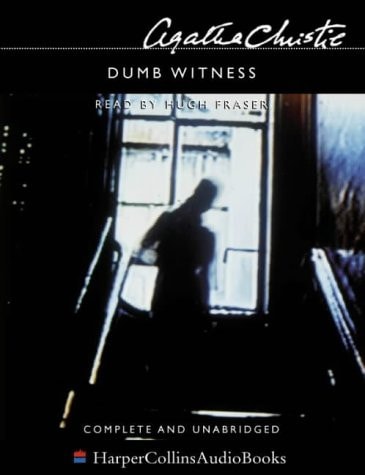
Dumb Witness
0
0
As an Amazon Associate and affiliate partner, Menrva Books earns from qualifying purchases. Learn more
Author Description
After an accident on the stairs, Emily becomes convinced that one of her relatives is trying to kill her. On April 17th she writes her suspicions in a letter to Hercule Poirot. Mysteriously he doesn't receive the letter until June 28th, by which time Emily is already dead.
Menrva's Summary
THE PULSE
When a wealthy spinster dies under suspicious circumstances, Hercule Poirot must unravel a web of familial greed and deception to identify a killer who believes they have escaped detection. After receiving a delayed letter from the late Emily Arundell expressing fear for her life, Poirot investigates her household to determine which of her relatives had the motive and opportunity to commit the crime. The narrative follows a classic whodunit structure, utilizing Poirot's methodical observation and psychological insight to navigate the complex social dynamics of the Arundell family. The investigation is constrained by the passage of time between the victim's death and the detective's arrival, forcing Poirot to rely on testimony and subtle inconsistencies in the suspects' accounts.
INSIDE THE PAGES
- Classic locked-room style investigation dynamics
- Focus on inheritance and familial greed as primary motives
- Utilization of a delayed letter as the inciting narrative device
- Inclusion of a canine witness to provide a unique perspective on the crime
- Traditional English country house setting
- Methodical interrogation of multiple suspects with conflicting alibis
- Emphasis on psychological profiling rather than forensic evidence
- Sharp, witty dialogue characteristic of the Golden Age of detective fiction
THE COLLECTIVE ECHO
This novel is widely regarded as a quintessential example of the Golden Age detective story, praised for its intricate plotting and the clever use of a non-human witness. Readers often highlight the satisfying nature of the puzzle and the way Christie manages to misdirect the audience through the complex relationships of the Arundell family. The pacing is noted for its steady, deliberate build, which allows the reader to engage fully with the clues presented alongside Poirot. While some critics point to the specific mechanics of the mystery as a product of its time, the consensus remains that it is a polished entry in the Poirot canon that rewards careful attention to detail.
Page Count:
0
Publication Date:
1937-07-05
Publisher:
Harpercollins Pub Ltd
ISBN-10:
0007139691
ISBN-13:
9780007139699
Fiction
Crime
Mystery
classic
Detective
Classic fiction
Mystery Thriller & Suspense
Crime & mystery
Community Tags
Similar Books