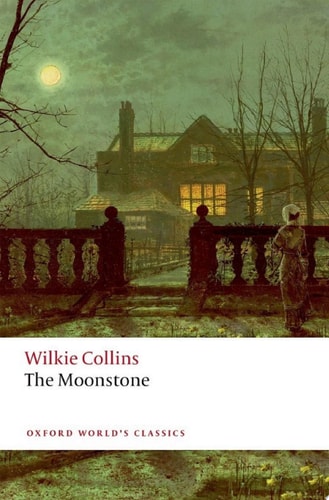
The Moonstone
0
0
As an Amazon Associate and affiliate partner, Menrva Books earns from qualifying purchases. Learn more
Author Description
Who, in the name of wonder, had taken the Moonstone out of Miss Rachel's drawer? A celebrated Indian yellow diamond is first stolen from India, then vanishes from a Yorkshire country house. Who took it? And where is it now? A dramatist as well as a novelist, Wilkie Collins gives to each of his narratorsa household servant, a detective, a lawyer, a cloth-eared Evangelical, a dying medical manvibrant identities as they separately tell the part of the story that concerns themselves. One of the great triumphs of nineteenth-century sensation fiction, The Moonstone tells of a mystery that for page after page becomes more, not less inexplicable. Collins's novel of addictions is itself addictive, moving through a sequence of startling revelations towards the final disclosure of the truth. Entranced with double lives, with men and women who only know part of the story, Collins weaves their narratives into a web of suspense. The Moonstone is a text that grows imaginatively out of the secrets that the unconventional Collins was obliged to keep as he wrote the novel.
Menrva's Summary
THE PULSE
The theft of a priceless Indian diamond from a Yorkshire country house triggers a complex investigation that exposes the hidden secrets of multiple household members. The protagonist, Rachel Verinder, finds her life disrupted when the Moonstone vanishes from her bedroom, leading to a frantic search for the culprit. Opposing forces include the social pressures of the Victorian era, the deceptive nature of the suspects, and the physical constraints of the isolated estate. The narrative framework utilizes a multi-perspective epistolary structure, where various characters provide their own accounts of the events to reconstruct the truth.
INSIDE THE PAGES
- Multi-narrator perspective structure
- Epistolary format including letters and journals
- Victorian country house setting
- Detective character archetype
- Themes of addiction and social class
- Gradual revelation of hidden motives
- Atmospheric suspense building
- Integration of colonial history and theft
THE COLLECTIVE ECHO
Discussion often centers on the innovative use of multiple narrators, which allows Collins to present a multifaceted view of the central mystery. Readers frequently highlight the atmospheric tension and the meticulous pacing that keeps the investigation engaging throughout the text. Critics often point to the novel as a foundational work in the development of the detective genre, noting its influence on subsequent mystery writers. The balance between character-driven drama and the mechanics of the crime remains a frequent topic of analysis for those examining nineteenth-century literature.
Page Count:
576
Publication Date:
2019-01-01
Publisher:
OUP Oxford
ISBN-10:
0192551450
ISBN-13:
9780192551450
Mystery
classic
Verinder rachel fictitious character fiction
Mystery fiction
English
England
Victorian
English & College Success
Detective
Sensation
Community Tags
Other Editions(73)

Classics Illustrated Comics
2025
Default edition
Creative Media Partners, LLC
2025
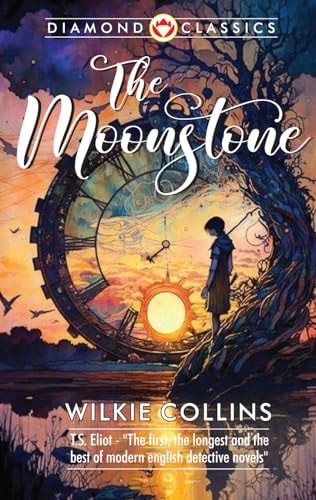
Diamond Pocket Books Pvt Limited
2024

Independently Published
2021

Independently Published
2021

Independently Published
2021

Mint Editions
2020
West Margin Press
2020

Independently Published
2020

Mint Editions
2020

Independently Published
2020
Amazon Digital Services LLC - KDP Print US
2019
Independently Published
2019

Prince Classics
2019

Independently Published
2019
OUP Oxford
2019
Oxford University Press
2019

CreateSpace Independent Publishing Platform
2018

CreateSpace Independent Publishing Platform
2018

CreateSpace Independent Publishing Platform
2018

CreateSpace Independent Publishing Platform
2018
CreateSpace Independent Publishing Platform
2018

CreateSpace Independent Publishing Platform
2018

CreateSpace Independent Publishing Platform
2018

Pan Macmillan
2018
SMK Books
2018

CreateSpace Independent Publishing Platform
2018

Independently Published
2018
Independently Published
2017

Independently Published
2017
CreateSpace Independent Publishing Platform
2017
CreateSpace Independent Publishing Platform
2017

CreateSpace Independent Publishing Platform
2017

CreateSpace Independent Publishing Platform
2017

CreateSpace Independent Publishing Platform
2017

CreateSpace Independent Publishing Platform
2017

CreateSpace Independent Publishing Platform
2017

CreateSpace Independent Publishing Platform
2017

CreateSpace Independent Publishing Platform
2017

CreateSpace Independent Publishing Platform
2017
CreateSpace Independent Publishing Platform
2017
Blurb, Incorporated
2017
CreateSpace Independent Publishing Platform
2017
CreateSpace Independent Publishing Platform
2017

CreateSpace Independent Publishing Platform
2016

CreateSpace Independent Publishing Platform
2016

CreateSpace Independent Publishing Platform
2016

CreateSpace Independent Publishing Platform
2016

CreateSpace Independent Publishing Platform
2016
CreateSpace Independent Publishing Platform
2016

CreateSpace Independent Publishing Platform
2016

Xist Publishing
2015

CreateSpace Independent Publishing Platform
2014
CreateSpace Independent Publishing Platform
2014

CreateSpace Independent Publishing Platform
2013
OXFORD UNIVERSITY PRESS
2013

Greatest Books Publisher
2012
Bukune
2012

Vivat Direct Limited/Reader's Digest
2011

Arcturus
2010
Random House Digital Inc.
2009

Wildside Press
2008
Pearson UK
2008
Echo Library
2007

Echo Library
2005
ImPress
2002

Barnes & Noble World Digital Library
2002
Oxford University Press
1999

Oxford University Press
1993

Bantam
1982

Amereon House
1976
Oxford University Press
1973
Oxford University Press
1928
Similar Books



Reader Comments
Share Your Thoughts
No comments yet. Be the first to share your thoughts!