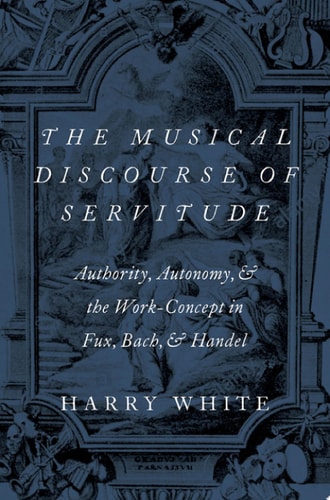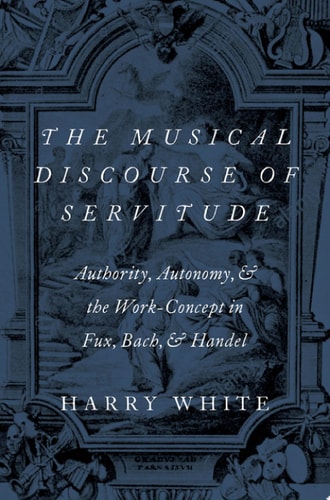
Musical Discourse of Servitude: Authority, Autonomy, and the Work-Concept in Fux, Bach and Handel
0
0
As an Amazon Associate and affiliate partner, Menrva Books earns from qualifying purchases. Learn more
Author Description
Examining, For The First Time, The Compositions Of Johann Joseph Fux In Relation To His Contemporaries Bach And Handel, The Musical Discourse Of Servitude Presents A New Theory Of The Late Baroque Musical Imagination. Author Harry White Contrasts Musical Servility And Freedom In His Analysis, With Fux Tied To The Prevailing Servitude Of The Day's Musical Imagination, Particularly The Hegemonic Flowering Of North Italian Partimento Method Across Europe. In Contrast, Both Bach And Handel Represented An Autonomy Of Musical Discourse, With Bach Exhausting Generic Models In The Mass And Handel Inventing A New Genre In The Oratorio. A Potent Critique Of Lydia Goehr's Seminal The Imaginary Museum Of Musical Works, The Musical Discourse Of Servitude Draws On Goehr's Formulation Of The Work-concept As An Imaginary Construct Which, According To Goehr, Is An Invention Of Nineteenth-century Reception History. White Locates This Concept As A Defining Agent Of Automony In Bach's Late Works, And Contextualized The Work-concept Itself By Exploring Rival Concepts Of Political, Religious, And Musical Authority Which Define The European Musical Imagination In The First Half Of The Eighteenth Century. A Major Revisionist Statement About The Musical Imagination In Western Art Music, The Musical Discourse Of Servitude Will Be Of Interest To Scholars Of The Baroque, Particularly Of Bach And Handel.
Menrva's Summary
THE THESIS
This book investigates the tension between musical servility and autonomy in the early eighteenth century by analyzing the works of Fux, Bach, and Handel. Harry White, a scholar of music history, utilizes a comparative framework to challenge established narratives regarding the development of the musical work-concept. By contrasting the rigid adherence to pedagogical traditions in Fux with the innovative departures of Bach and Handel, White argues that the emergence of musical autonomy was deeply rooted in the political and religious power structures of the era.
THE SCOPE MAP
What You Will Find
- Comparative analysis of Johann Joseph Fux, J.S. Bach, and G.F. Handel
- Examination of the North Italian partimento method and its influence on European musical pedagogy
- Critical engagement with Lydia Goehr's work-concept theory
- Contextualization of musical production within 18th-century political and religious authority
Scope Limits
- The analysis is primarily restricted to the first half of the eighteenth century
- The text does not provide a comprehensive biography of the composers, focusing instead on specific compositional strategies
THE AUTHORITY PERSPECTIVE
Scholars recognize this text as a significant revisionist contribution to Baroque musicology that challenges standard reception history. Readers frequently note the academic density of the prose and the rigorous nature of White's engagement with philosophical constructs in music.
Page Count:
288
Publication Date:
2020-09-01
Publisher:
Oxford University Press, Incorporated
ISBN-10:
0190903880
ISBN-13:
9780190903886
Baroque Music
Music History
Musicology
Music Philosophy
Criticism history
Music theory
Community Tags
Similar Books