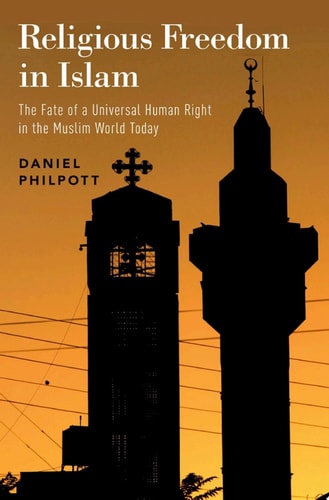
Religious Freedom in Islam: The Fate of a Universal Human Right in the Muslim World Today
0
0
As an Amazon Associate and affiliate partner, Menrva Books earns from qualifying purchases. Learn more
Author Description
Since at least the attacks of September 11, 2001, one of the most pressing political questions of the age has been whether Islam is hostile to religious freedom. Daniel Philpott examines conditions on the ground in forty-seven Muslim-majority countries today and offers an honest, clear-eyed answer to this urgent question. It is not, however, a simple answer. From a satellite view, the Muslim world looks unfree. But, Philpott shows, the truth is much more complex. Some one-fourth of Muslim-majority countries are in fact religiously free. Of the other countries, about forty percent are governed not by Islamists but by a hostile secularism imported from the West, while the other sixty percent are Islamist. The picture that emerges is both honest and hopeful. Yes, most Muslim-majority countries are lacking in religious freedom. But, Philpott argues, the Islamic tradition carries within it "seeds of freedom," and he offers guidance for how to cultivate those seeds in order to expand religious freedom in the Muslim world and the world at large.It is an urgent project. Religious freedom promotes goods like democracy and the advancement of women that are lacking in the Muslim-majority world and reduces ills like civil war, terrorism, and violence. Further, religious freedom is simply a matter of justice--not an exclusively Western value, but rather a universal right rooted in human nature. Its realization is critical to the aspirations of religious minorities and dissenters in Muslim countries, to Muslims living in non-Muslim countries or under secular dictatorships, and to relations between the West and the Muslim world. In this thoughtful book, Philpott seeks to establish a constructive middle ground in a fiery and long-lasting debate over Islam.
Menrva's Summary
THE THESIS
This book investigates whether the Islamic tradition is inherently hostile to religious freedom or if it contains internal resources capable of supporting universal human rights. Daniel Philpott, a professor of political science, utilizes a comparative analysis of forty-seven Muslim-majority nations to challenge monolithic perceptions of the region. He argues that the status of religious freedom is highly variable, influenced by both Islamist governance and imported secularist models, and posits that indigenous Islamic theological resources can be cultivated to foster greater liberty.
THE SCOPE MAP
What You Will Find
- Comparative data on religious freedom across forty-seven Muslim-majority countries.
- A taxonomy of governance models including Islamist regimes and secularist states.
- An analysis of theological "seeds of freedom" within Islamic tradition.
- Arguments linking religious freedom to broader social goods like democracy and stability.
Scope Limits
- The study does not provide a comprehensive history of Islamic jurisprudence.
- It does not offer a detailed policy roadmap for specific individual nations.
THE AUTHORITY PERSPECTIVE
Experts recognize this work as a nuanced contribution to the debate on Islam and human rights, frequently noting its departure from simplistic cultural essentialism. Scholars appreciate the author's empirical approach to a topic often dominated by polemical discourse.
Page Count:
323
Publication Date:
2019-01-01
Publisher:
Oxford University Press
ISBN-10:
0190908203
ISBN-13:
9780190908201
Religion
Human rights
Sociology
International relations
Islam
Freedom of religion
Liberty
Community Tags
Similar Books