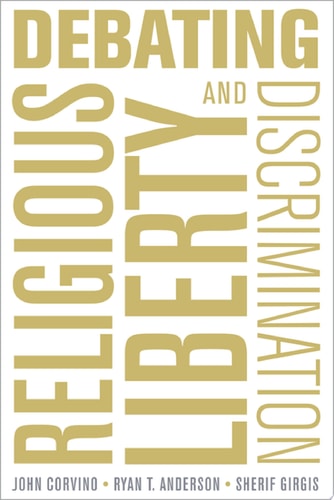
Debating Religious Liberty and Discrimination
0
0
As an Amazon Associate and affiliate partner, Menrva Books earns from qualifying purchases. Learn more
Author Description
Virtually everyone supports religious liberty, and virtually everyone opposes discrimination. But how do we handle the hard questions that arise when exercises of religious liberty seem to discriminate unjustly? How do we promote the common good while respecting conscience in a diverse society?This point-counterpoint book brings together leading voices in the culture wars to debate such questions: John Corvino, a longtime LGBT-rights advocate, opposite Ryan T. Anderson and Sherif Girgis, prominent young social conservatives.Many such questions have arisen in response to same-sex marriage: How should we treat county clerks who do not wish to authorize such marriages, for example; or bakers, florists, and photographers who do not wish to provide same-sex wedding services? But the conflicts extend well beyond the LGBT rights arena. How should we treat hospitals, schools, and adoption agencies that can't in conscience follow antidiscrimination laws, healthcare mandates, and other regulations? Should corporations ever get exemptions? Should public officials?Should we keep controversial laws like the Religious Freedom Restoration Act, or pass new ones like the First Amendment Defense Act? Should the law give religion and conscience special protection at all, and if so, why? What counts as discrimination, and when is it unjust? What kinds of material and dignitary harms should the law try to fight-and what is dignitary harm, anyway?Beyond the law, how should we treat religious beliefs and practices we find mistaken or even oppressive? Should we tolerate them or actively discourage them?In point-counterpoint format, Corvino, Anderson and Girgis explore these questions and more. Although their differences run deep, they tackle them with civility, clarity, and flair. Their debate is an essential contribution to contemporary discussions about why religious liberty matters and what respecting it requires.
Menrva's Summary
THE THESIS
How can a diverse society reconcile the fundamental right to religious liberty with the imperative to prevent unjust discrimination? The authors, representing opposing ideological poles, utilize a point-counterpoint framework to examine the legal, moral, and social tensions inherent in balancing conscience-based exemptions against anti-discrimination mandates. By contrasting the perspectives of an LGBT-rights advocate with those of prominent social conservatives, the text provides a structured inquiry into the limits of religious accommodation in the public square.
THE SCOPE MAP
What You Will Find
- Analysis of legal frameworks including the Religious Freedom Restoration Act and the First Amendment Defense Act.
- Examination of specific case studies involving service providers, public officials, and religious institutions.
- Philosophical exploration of the definitions of discrimination, dignitary harm, and the common good.
Scope Limits
- The text does not provide a definitive legal resolution to current pending litigation.
- It does not offer a comprehensive history of religious freedom jurisprudence beyond the context of modern culture war debates.
THE AUTHORITY PERSPECTIVE
Experts and readers frequently note the clarity and civility of the debate, which allows for a nuanced understanding of complex constitutional questions. The book is widely regarded as a balanced resource for students and citizens seeking to understand the competing arguments surrounding religious exemptions in contemporary law.
Page Count:
352
Publication Date:
2017-06-01
Publisher:
Oxford University Press
ISBN-10:
0190603070
ISBN-13:
9780190603076
Religion
Philosophy
Politics
Freedom of religion
Social Issues
Human rights
Law
United States
Community Tags
Other Editions(3)

Similar Books

Reader Comments
Share Your Thoughts
No comments yet. Be the first to share your thoughts!