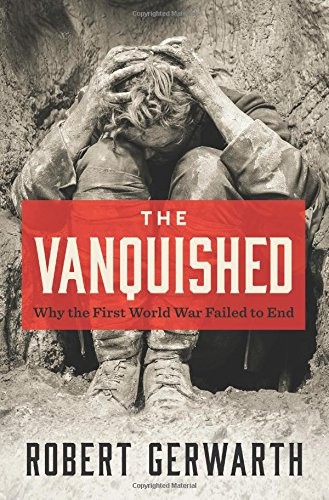
The Vanquished
0
0
As an Amazon Associate and affiliate partner, Menrva Books earns from qualifying purchases. Learn more
Author Description
Contains primary source material. An epic, groundbreaking account of the ethnic and state violence that followed the end of World War I-- conflicts that would shape the course of the twentieth century. For the Western allies, November 11, 1918 has always been a solemn date-- the end of fighting that had destroyed a generation, but also a vindication of a terrible sacrifice with the total collapse of the principal enemies: the German Empire, Austria-Hungary, and the Ottoman Empire. But for much of the rest of Europe this was a day with no meaning, as a continuing, nightmarish series of conflicts engulfed country after country. In The Vanquished, a highly original and gripping work of history, Robert Gerwarth asks us to think again about the true legacy of the First World War. In large part it was not the fighting on the Western Front that proved so ruinous to Europe's future, but the devastating aftermath, as countries on both sides of the original conflict were savaged by revolutions, pogroms, mass expulsions, and further major military clashes. If the war itself had in most places been a struggle mainly between state-backed soldiers, these new conflicts were predominantly perpetrated by civilians and paramilitaries, and driven by a murderous sense of injustice projected on to enemies real and imaginary. In the years immediately after the armistice, millions would die across Central, Eastern, and Southeastern Europe before the Soviet Union and a series of rickety and exhausted small new states would come into being. It was here, in the ruins of Europe, that extreme ideologies such as fascism would take shape and ultimately emerge triumphant in Italy, Germany, and elsewhere. As absorbing in its drama as it is unsettling in its analysis, The Vanquished is destined to transform our understanding of not just the First World War but of the twentieth century as a whole
Menrva's Summary
THE THESIS
The end of World War I unleashed a wave of ethnic and state violence across Europe that fundamentally reshaped the 20th century. While the Western Allies saw November 11, 1918, as a victory, much of Central, Eastern, and Southeastern Europe descended into a maelstrom of revolutions, pogroms, mass expulsions, and further military clashes. These post-armistice conflicts, largely driven by civilians and paramilitaries fueled by a sense of injustice, claimed millions of lives and paved the way for the rise of extreme ideologies like fascism. Gerwarth's work argues that this devastating aftermath, rather than the war itself, was the true ruinous legacy of the First World War, shaping the emergence of new states and the political landscape for decades to come.
THE SCOPE MAP
- Analysis of the ethnic and state violence following World War I.
- Examination of the conflicts in Central, Eastern, and Southeastern Europe.
- Discussion of revolutions, pogroms, and mass expulsions.
- Exploration of the role of civilians and paramilitaries in post-war violence.
- Investigation into the emergence of extreme ideologies such as fascism.
- Use of primary source material to reconstruct these events.
THE AUTHORITY PERSPECTIVE
Robert Gerwarth's 'The Vanquished' is presented as a significant historical account that challenges conventional understandings of the First World War's legacy. The book is noted for its use of primary source material and its focus on the often-overlooked post-armistice violence that plagued Europe. Its analysis suggests that the true impact of the war was not the fighting itself, but the brutal and transformative aftermath that set the stage for much of the 20th century's turmoil and the rise of extremist movements.
Page Count:
446
Publication Date:
2016-01-01
ISBN-10:
0374282455
ISBN-13:
9780374282455
Politics
Non-Fiction
Art
History
European History
Community Tags
Similar Books