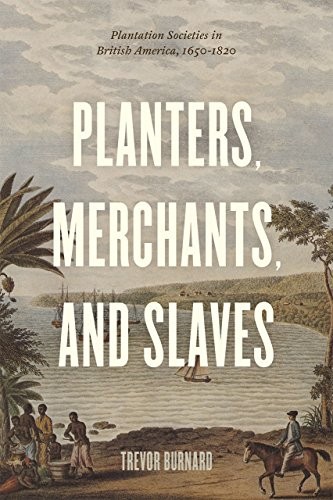
Planters, Merchants, and Slaves
0
0
As an Amazon Associate and affiliate partner, Menrva Books earns from qualifying purchases. Learn more
Author Description
As with any enterprise involving violence and lots of money, running a plantation in early British America was a serious and brutal enterprise. Beyond resources and weapons, a plantation required a significant force of cruel and rapacious men--men who, as Trevor Burnard sees it, lacked any better options for making money. In the contentious Planters, Merchants, and Slaves, Burnard argues that white men did not choose to develop and maintain the plantation system out of virulent racism or sadism, but rather out of economic logic because--to speak bluntly--it worked. These economically successful and ethically monstrous plantations required racial divisions to exist, but their successes were always measured in gold, rather than skin or blood. Burnard argues that the best example of plantations functioning as intended is not those found in the fractious and poor North American colonies, but those in their booming and integrated commercial hub, Jamaica. Sure to be controversial, this book is a major intervention in the scholarship on slavery, economic development, and political power in early British America, mounting a powerful and original argument that boldly challenges historical orthodoxy.
Menrva's Summary
THE THESIS
This book investigates the economic logic and brutal realities behind the plantation system in early British America. Trevor Burnard argues that the development and maintenance of plantations were driven not by inherent racism or sadism, but by economic pragmatism, as these systems were demonstrably profitable. The success of these ethically monstrous enterprises, particularly in Jamaica, was measured in financial gain rather than human suffering, though racial divisions were a necessary component for their existence. The book challenges conventional scholarship by asserting that economic efficiency, not ideology, was the primary driver of the plantation system.
THE SCOPE MAP
- Analysis of plantation operations as a serious and brutal enterprise.
- Argument that white men participated due to lack of better economic options.
- Contention that economic logic, not racism or sadism, fueled the plantation system.
- Examination of racial divisions as a necessary condition for plantation success.
- Focus on financial success as the primary measure of plantation effectiveness.
- Case study of Jamaica as the prime example of plantations functioning as intended.
- Intervention in scholarship on slavery, economic development, and political power in early British America.
- Challenge to historical orthodoxy regarding the motivations behind the plantation system.
THE AUTHORITY PERSPECTIVE
Planters, Merchants, and Slaves is positioned as a major and potentially controversial intervention in the scholarship on slavery and early British American economic history. The book's central argument, that economic logic rather than inherent racism drove the plantation system, is presented as a bold challenge to historical orthodoxy. It is expected to provoke debate among scholars of slavery, economic development, and political power in the early colonial period. The work focuses on the pragmatic, albeit ethically monstrous, successes measured in gold.
Page Count:
360
Publication Date:
2019-01-01
ISBN-10:
022663924X
ISBN-13:
9780226639246
Non-Fiction
History
Slavery
Caribbean History
Economic History
Community Tags
Similar Books