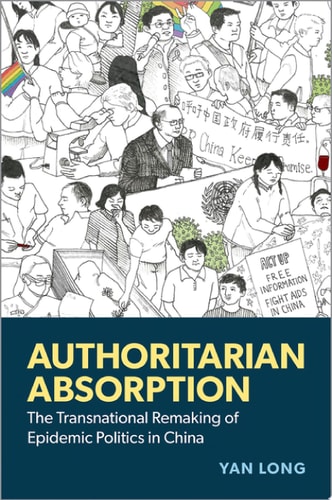
Authoritarian Absorption: The Transnational Remaking of Epidemic Politics in China
0
0
As an Amazon Associate and affiliate partner, Menrva Books earns from qualifying purchases. Learn more
Author Description
Authoritarian Absorption portrays the rebuilding of China's pandemic response system through its anti-HIV/AIDS battle from 1978 to 2018. Going beyond the conventional domestic focus, Yan Long analyzes the influence of foreign interventions which challenged the post-socialist state's inexperience with infectious diseases and pushed it towards professionalizing public health bureaucrats and embracing more liberal, globally aligned technocratic measures. This transformation involved a mix of confrontation and collaboration among transnational organizations, the Chinese government, and grassroots movements, which turned epidemics into a battleground for enhancing the state's domestic control and international status. Foreign interveners effectively mobilized China's AIDS movement and oriented activists towards knowledge-focused epistemic activities to propel the insertion of Western rules, knowledge, and practices into the socialist systems. Yet, Chinese bureaucrats played this game to their advantage by absorbing some AIDS activist subgroups―notably those of urban HIV-negative gay men―along with their foreign-trained expertise and technical proficiency into the state apparatus. This move allowed them to expand bodily surveillance while projecting a liberal façade for the international audience.Drawing on longitudinal-ethnographic research, Long argues against a binary view of Western liberal interventions as either success or failure, highlighting instead the paradoxical outcomes of such efforts. On one hand, they can bolster public health institutions in an authoritarian context, a development pivotal to China's subsequent handling of COVID-19 and instrumental in advancing the rights of specific groups, such as urban gay men. On the other hand, these interventions may reinforce authoritarian control and further marginalize certain populations―such as rural people living with HIV/AIDS and female sex workers―within public health systems.
Menrva's Summary
THE THESIS
This book investigates how China transformed its pandemic response system between 1978 and 2018 by absorbing transnational influences into its authoritarian governance structure. Yan Long, a sociologist, utilizes longitudinal ethnographic research to examine the interplay between foreign health interventions, grassroots activism, and state bureaucracy. The work argues that these external pressures did not simply democratize Chinese public health but were strategically co-opted by the state to professionalize its technocratic apparatus while simultaneously expanding surveillance capabilities.
THE SCOPE MAP
What You Will Find
- Analysis of the evolution of China's HIV/AIDS response infrastructure.
- Examination of the relationship between transnational NGOs and local activist groups.
- Case studies on the professionalization of public health bureaucrats.
- Assessment of how global health standards are adapted within socialist systems.
Scope Limits
- The study focuses primarily on the period from 1978 to 2018.
- It does not provide a comprehensive history of all infectious disease management in China.
THE AUTHORITY PERSPECTIVE
Scholars in the fields of sociology and political science recognize this work as a nuanced contribution to the study of authoritarian resilience and global health governance. Readers frequently note the academic density of the prose and the depth of the ethnographic evidence provided.
Page Count:
408
Publication Date:
2024-11-26
Publisher:
Oxford University Press
ISBN-10:
0190900199
ISBN-13:
9780190900199
Politics
Public Health
Sociology
Public Policy
Epidemiology
International relations
Medicine
China Studies
Community Tags
Similar Books