Silent Witness
0
0
As an Amazon Associate and affiliate partner, Menrva Books earns from qualifying purchases. Learn more
Author Description
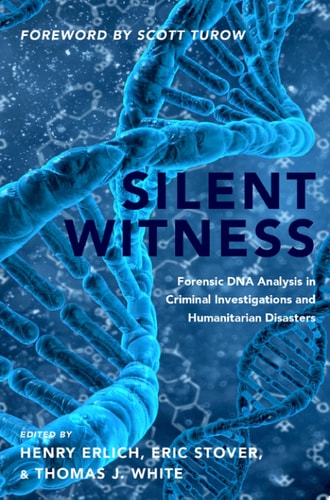
Since Its Introduction In The Late 1980s, Dna Analysis Has Revolutionized The Forensic Sciences: It Has Helped To Convict The Guilty, Exonerate The Wrongfully Convicted, Identify Victims Of Mass Atrocities, And Reunite Families Whose Members Have Been Separated By War And Repressive Regimes. Yet, Many Of The Scientific, Legal, Societal, And Ethical Concepts That Underpin Forensic Dna Analysis Remain Poorly Understood, And Their Application Often Controversial. Told By Over Twenty Experts In Genetics, Law, And Social Science, Silent Witness Relates The History And Development Of Modern Dna Forensics And Its Application In Both The Courtroom And Humanitarian Settings. Across Three Thematic Sections, Silent Witness Tracks The Scientific Advances In Dna Analysis And How These Developments Have Affected Criminal And Social Justice, Whether Through The Arrests Of New Suspects, As In The Case Of The Golden State Killer, Or Through The Ability To Identify Victims Of War, Terrorism, And Human Rights Abuses, As In The Cases Of The Disappeared In Argentina And The Former Yugoslavia And Those Who Perished During The 9/11 Attacks. By Providing A Critical Inquiry Into Modern Forensic Dna Science, Silent Witness Underscores The Need To Balance The Benefits Of Using Forensic Genetics To Solve Crime With The Democratic Right To Safeguard Against Privacy Invasion And Unwarranted Government Scrutiny, And Raises The Question Of What It Means To Be An Autonomous Individual In A World Where The Most Personal Elements Of One's Identity Are Now Publicly Accessible.
Menrva's Summary
THE THESIS
How can society effectively balance the utility of forensic DNA analysis in criminal justice and humanitarian identification with the fundamental human right to genetic privacy? Eric Stover and his co-authors, a collective of experts in genetics, law, and social science, examine the evolution of DNA forensics from its inception in the 1980s to its current status as a primary tool for state and international actors. The text provides a multi-disciplinary framework that evaluates the scientific capabilities of DNA profiling alongside the legal and ethical challenges posed by its widespread application in both courtroom proceedings and human rights investigations.
THE SCOPE MAP
What You Will Find
- Historical development of DNA analysis techniques since the late 1980s.
- Case studies involving the identification of victims in Argentina, the former Yugoslavia, and the 9/11 attacks.
- Analysis of the tension between public safety and individual privacy rights.
- Examination of the use of forensic genetics in high-profile criminal investigations like the Golden State Killer.
Scope Limits
- The text does not provide a technical manual for laboratory procedures or molecular biology protocols.
- It does not offer a definitive legal resolution to the ongoing debates regarding genetic surveillance.
THE AUTHORITY PERSPECTIVE
Experts and academics characterize this work as a comprehensive overview of the intersection between forensic science and human rights. Readers frequently note the balance between technical accessibility and the rigorous ethical inquiry required for understanding modern genetic surveillance.
Page Count:
280
Publication Date:
2020-01-01
Publisher:
Oxford University Press
ISBN-10:
0190909463
ISBN-13:
9780190909468
Non-Fiction
Sociology
Human rights
Forensic Science
Genetics
Law
Community Tags
Similar Books